Water Extraction in Douglasville, GA
Standing water turns into soaked pad, swollen drywall and wet framing quickly, so the extraction crew pumps it out first and then sets up equipment to dry what remains.
(888) 532-4616Get the water out of your Douglas County home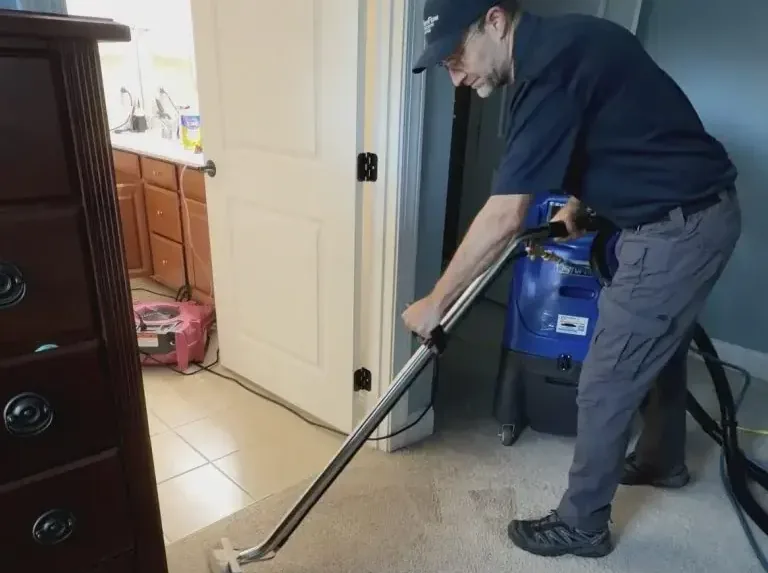
First steps for water extraction and removal in Douglasville
- 01Make it safe Close the main valve or the shutoff at the failed fixture, and stay out of any room where water has reached outlets or cords.
- 02Photograph the water Take photos of the water level, the floors and any belongings that got wet, before anything is moved or thrown out.
- 03Lift small items Raise furniture legs onto blocks, pull rugs and move electronics to dry ground so they stop soaking up water.
- 04Call for extraction Describe the water depth and the rooms affected so the crew can bring the right pumps and extractors.
Water on a floor does not stay on the surface for long. It wicks into carpet pad, the bottom of drywall and the framing beneath, and Douglas County has a record of fast overnight flooding, including September 2009 and April 2014. The extraction crew gets the water out before that spread takes hold.
Rapid local response
Dispatch runs 24/7, and active water is treated as urgent, because it moves into subfloor and drywall within hours.
IICRC S500 drying standard
Moisture gets mapped first. Air movers and LGR dehumidifiers then run until the readings match a dry reference, not until the surface looks dry.
Claim-ready documentation
Daily moisture readings, psychrometric logs and timestamped photos taken before any demolition go into the file an adjuster reviews.
Local water know-how
Red clay, creek-side lots, crawl spaces, basements on sloped ground and attic equipment shape how water moves through homes in west Cobb.
What does water extraction and removal cost in Douglasville, GA?
Extraction alone is the least expensive stage, and most jobs land between $500 and $9,000 depending on depth, floor type and whether the water is clean or contaminated.
One room, caught early
- Wand extraction on the floor
- Pad checked and pulled if wet
- Edge moisture readings
Several rooms or a lower level
- Truck-mounted pump-out
- Pad removal and disposal
- Drying equipment set after
Deep or Category 3 water
- Pumping before extraction
- Contaminated flooring removed
- Containment and antimicrobial
Ranges are typical, never a quote: the category of water, square footage, material class and how fast drying started move the number most.
Work out a closer range in the cost calculatorHow water extraction and removal gets done, step by step
The tech who does the walkthrough maps moisture before any equipment goes down, so the plan matches what is actually wet. Equipment stays until the readings say dry.
Size up the water
The crew checks depth, flooring type and how far the water has traveled into walls and adjoining rooms.
Pump and extract
Submersible pumps clear deep water, then extractor wands pull moisture from carpet, pad or hard flooring.
Remove what will not dry
Saturated pad, soaked baseboard and swollen drywall edges are cut out so they do not hold water against the framing.
Hand off to drying
Readings are logged and the drying setup is planned so the rest of the moisture leaves the structure.
How the water comes out
The work starts with a scan of the floor, then a portable or truck-mounted extractor lifts standing water from carpet and hard floors. Hard floors such as tile, vinyl and sealed wood often come through extraction in good shape, while carpet depends on how clean the water was and how long it sat. Where pad is holding water it is cut out and removed, and the subfloor is checked before any drying equipment is set.
- Wand extraction on carpet, tile, vinyl and wood floors, working from the lowest spot outward
- Submersible pumps when the water is deep enough to pump before extracting
- Pad removal when it is too saturated to dry in place
- Moisture readings along baseboards and door frames to find water that moved sideways
Water standing on the floor right now? Get an extraction crew moving.
(888) 532-4616Ask how extraction worksWhy speed matters here
In September 2009 extreme overnight rain flooded Douglas County and destroyed many roads and homes, and in April 2014, Fowler Field on Chapel Hill Road looked like a lake after three inches or more of rain. Events like those show how quickly floors go under. Once water has stood for a day, drywall wicks upward, pad turns musty and mold can begin within 24 to 48 hours, so pulling the water out is the first job rather than an afterthought.
What gets documented
Each job is photographed before and after, with moisture readings from floors and walls recorded as the work moves along. Those records show an adjuster what was wet and which materials came out, and they set the baseline for the drying described in structural drying. Removed pad is bagged and hauled away by the crew.
Water extraction and removal across Douglasville and nearby towns
The extraction crew works across Douglasville, from the blocks around historic downtown and O'Neal Plaza to homes along Chapel Hill Road and Georgia State Route 92, and it serves unincorporated addresses with a Douglasville mailing address too.
The same service nearby: water extraction and removal in Austell, Mableton, Powder Springs.
Related water damage services in Douglasville
Water Extraction and Removal questions in Douglasville, GA
Water still spreading?
Shut off the water if you can and keep clear of wet outlets. Dispatch runs 24/7.
(888) 532-4616 Ask how extraction worksHow quickly does water need to come out?
As soon as it is found. Pad starts holding water right away, drywall wicks upward, and mold can begin in 24 to 48 hours, so extraction comes before every other step.
Can wet carpet be saved after extraction?
Often the carpet can be, when the water was clean and the pad is replaced. Carpet that sat in contaminated water, or has been wet for days, usually has to be removed.
Does extraction include drying the structure?
Extraction removes standing water, but wet framing, subfloor and drywall still hold moisture afterward. Air movers and dehumidifiers follow, as covered under structural drying.
What equipment pulls the water out?
Portable extractors handle carpet and small areas, truck-mounted units cover large floors, and submersible pumps clear deep water first. Which one is used depends on the depth and the floor.
Is water from a flooded floor safe to handle?
Clean supply water is lower risk, but floodwater and sewage are Category 3 and call for protective gear. When in doubt, stay out and let the crew test and contain the area.
Does insurance cover water extraction?
Sudden and accidental water, such as a failed hose or a burst pipe, is commonly covered, while rising floodwater usually needs a separate flood policy. Photos and readings from the crew support the claim.
Get the water out before it spreads
Describe the depth and the rooms affected, and the crew will plan pumps, extractors and the drying stage that follows.
(888) 532-4616Request a pump and extractor crew