Structural Drying in Douglasville, GA
Wet framing, subfloor and drywall are dried with air movers and LGR dehumidifiers after the water is gone, and daily moisture readings decide when the equipment can come out.
(888) 532-4616Set up measured drying for your home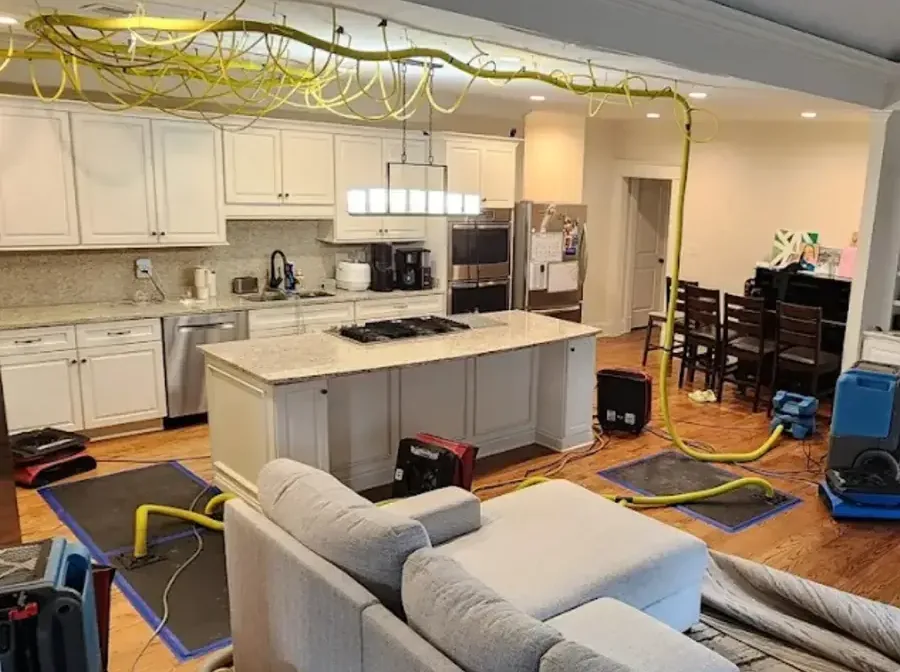
First steps for structural drying and dehumidification in Douglasville
- 01Leave the equipment on Once drying starts, keep the equipment running because turning units off early lets moisture settle back.
- 02Keep doors and windows shut Closed rooms let dehumidifiers work on the wet air instead of drawing in outdoor humidity.
- 03Clear the wet area Move furniture and belongings out of the room or onto blocks so air can reach floors and wall bottoms.
- 04Allow daily checks The crew checks readings and moves equipment each day, so the drying plan can adjust as areas dry.
Removing the water is only half of a dry-out. Framing, subfloor and drywall keep moisture inside long after the surface looks dry, and that hidden water is what leads to swelling, odor and mold. Structural drying is the measured process that pulls it out.
Rapid local response
Dispatch runs 24/7, and active water is treated as urgent, because it moves into subfloor and drywall within hours.
IICRC S500 drying standard
Moisture gets mapped first. Air movers and LGR dehumidifiers then run until the readings match a dry reference, not until the surface looks dry.
Claim-ready documentation
Daily moisture readings, psychrometric logs and timestamped photos taken before any demolition go into the file an adjuster reviews.
Local water know-how
Red clay, creek-side lots, crawl spaces, basements on sloped ground and attic equipment shape how water moves through homes in west Cobb.
What does structural drying and dehumidification cost in Douglasville, GA?
Structural drying costs about $1,200 for a small, dry-in-place job and up to $18,000 for a whole level or Class 4 materials like hardwood and concrete that dry slowly.
Class 1 or 2, one area
- Air movers and an LGR unit
- Several days of drying
- Readings each day
Several rooms or Class 3
- Containment and extra units
- Cavity drying
- Psychrometric logs
Class 4 or a whole level
- Desiccant dehumidification
- Hardwood and concrete drying
- Long monitoring period
Ranges are typical, never a quote: the category of water, square footage, material class and how fast drying started move the number most.
Work out a closer range in the cost calculatorHow structural drying and dehumidification gets done, step by step
The tech who does the walkthrough maps moisture before any equipment goes down, so the plan matches what is actually wet. Equipment stays until the readings say dry.
Read and map
Meters and a thermal camera record starting moisture in each material and mark the wet boundary.
Place the equipment
Air movers and LGR dehumidifiers are set to cover walls, floors and opened cavities, with doors closed.
Monitor each day
Readings and humidity logs are taken at every visit, and units are moved or added where moisture lingers.
Confirm dry
When every point reaches its dry reference the equipment is removed and the log is handed over.
How drying works
Air movers push dry air across wet surfaces and into opened cavities, while LGR dehumidifiers pull the moisture out of the air so it cannot settle back. Drying mats can draw water out of hard floors, and containment keeps the equipment working on the wet area instead of the whole house.
- Air movers placed along walls and in opened cavities
- LGR dehumidifiers sized to the volume of the wet space
- Mats and ports for hardwood and concrete floors
- Psychrometric logs of temperature and humidity each visit
Wet walls or floors after the water is gone? Get measured drying started.
(888) 532-4616Ask about dehumidificationAfter floods and leaks
After flooding like September 2009, when extreme overnight rain hit Douglas County, wet framing and subfloor held moisture long after the water was gone. The same is true after a pipe break or a roof leak: the surface dries first, and the structure takes longer. Drying continues until each material reads dry, not until a set number of days has passed. Flood work is covered under storm flood cleanup.
Readings, not guesses
Each visit the crew measures moisture in drywall, wood and concrete, records temperature and humidity and moves equipment toward the wettest spots. When every point reads at its dry reference, the equipment is removed and the log is handed over for the insurance file. The stage before this is covered in water extraction.
Structural drying and dehumidification across Douglasville and nearby towns
Drying equipment goes into homes and businesses across the Douglasville area, from the Douglas Boulevard Corridor to historic downtown, North Douglasville and subdivisions such as Anneewakee Trails and Bear Creek Club.
The same service nearby: structural drying and dehumidification in Austell, Mableton, Powder Springs.
Related water damage services in Douglasville
Structural Drying and Dehumidification questions in Douglasville, GA
Water still spreading?
Shut off the water if you can and keep clear of wet outlets. Dispatch runs 24/7.
(888) 532-4616 Ask about dehumidificationHow long does structural drying take?
Most jobs need several days, and heavy flooding or dense materials like hardwood and concrete can take longer. Daily readings decide the finish date, not a fixed schedule.
Why are the machines so loud and warm?
Air movers and dehumidifiers run all day, and the dehumidifiers give off heat as they pull water from the air. That warm, dry air is what lets moisture leave the walls and floors.
Can I turn the equipment off at night?
It is best not to. Stopping the units lets humid air return and slows progress, and wet materials can start to swell or smell again. Running them through the night shortens the job.
What are Class 1 through Class 4 jobs?
The classes describe how much water materials absorbed and how fast they release it. Class 1 is minimal, and Class 4 is deep saturation in dense materials such as hardwood or concrete.
Will drying raise my electric bill?
Yes, equipment runs for days and uses electricity, which should be mentioned in the claim. The crew's records of equipment and run time support that cost.
Dry the structure, not just the surface
Describe what was wet and how long it sat, and the crew will plan equipment, daily readings and a finish date based on the numbers.
(888) 532-4616Request a drying plan