Basement Flooding Cleanup in Douglasville, GA
When heavy rain pushes water into a lower level, the first job is extracting it, and the second is drying everything it touched, from carpet and pad to wall bases and the slab.
(888) 532-4616Pump out the lower level now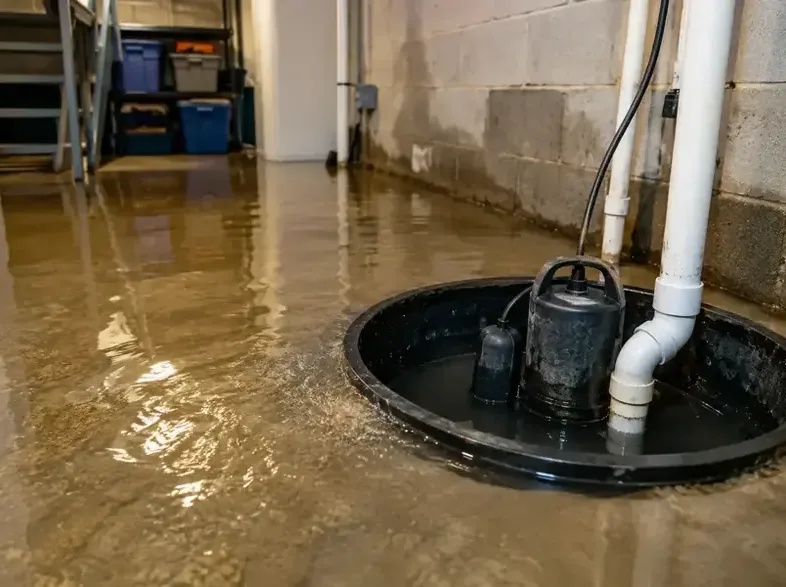
First steps for basement flooding cleanup in Douglasville
- 01Cut the power If water is near outlets or the panel, leave the lower level and have the circuits shut off from a dry spot.
- 02Find where it enters Note whether it is rain seeping in, a sump failure, a plumbing leak or a drain backing up, because each is handled differently.
- 03Raise the valuables Carry boxes, electronics and furniture to higher ground and photograph anything that stays in the water.
- 04Call for a pump-out Report the depth and the rooms affected so the crew brings pumps, extractors and drying equipment.
Water in a lower level has nowhere to go but into the floor and walls. Carpet and pad soak it up, drywall wicks it above the waterline and the slab and block hold moisture long after the surface looks dry. A fast pump-out and a drying plan that covers the whole level keep the damage from spreading upstairs.
Rapid local response
Dispatch runs 24/7, and active water is treated as urgent, because it moves into subfloor and drywall within hours.
IICRC S500 drying standard
Moisture gets mapped first. Air movers and LGR dehumidifiers then run until the readings match a dry reference, not until the surface looks dry.
Claim-ready documentation
Daily moisture readings, psychrometric logs and timestamped photos taken before any demolition go into the file an adjuster reviews.
Local water know-how
Red clay, creek-side lots, crawl spaces, basements on sloped ground and attic equipment shape how water moves through homes in west Cobb.
What does basement flooding cleanup cost in Douglasville, GA?
Lower-level flood cleanup runs from about $2,500 for shallow water in an unfinished space to $35,000 for deep or contaminated water in a finished level.
Bare floor, shallow water
- Pump-out and extraction
- Slab and wall base drying
- Moisture checks each day
Finished lower level
- Carpet and pad removed
- Flood cuts and insulation out
- Whole-level dehumidification
Deep or contaminated water
- Category 3 removal and cleaning
- Antimicrobial treatment
- Long slab and block drying
Ranges are typical, never a quote: the category of water, square footage, material class and how fast drying started move the number most.
Work out a closer range in the cost calculatorHow basement flooding cleanup gets done, step by step
The tech who does the walkthrough maps moisture before any equipment goes down, so the plan matches what is actually wet. Equipment stays until the readings say dry.
Measure the water
Depth is recorded and the entry point noted, then pumps are sized to the volume that must come out.
Pump and extract
Submersible pumps drop the level, and extractors pull what remains from carpet, pad and floor.
Strip wet materials
Carpet, pad, lower drywall and insulation are cut out so block, slab and framing can release moisture.
Dry the whole level
Dehumidifiers and air movers run until slab, walls and stair framing reach dry readings across the level.
How the water gets in
Heavy rain is the usual trigger. Water can seep through walls and floor joints, rise through a drain or overwhelm a sump pump, and a failed water heater or supply pipe can flood the same space from above. The crew treats rain, plumbing and sewer water differently.
- Pump-out first, with extractors finishing carpet and hard floors
- Carpet, pad and wet drywall removed so the slab and block can dry
- Dehumidifiers sized to the full level, not just the wettest corner
- Readings taken at floor, wall and slab each day
Water in the lower level? Get the pump-out crew started.
(888) 532-4616Ask about pump-outsRain events and what they teach
The September 2009 flood arrived overnight and was most severe in Douglasville, Villa Rica, Austell, Lithia Springs and Chapel Hill, and the April 2014 rain showed that a single night of heavy rain can still flood parts of the county. Anyone with a lower level should know where water would enter, keep valuables off the floor and call for extraction as soon as water appears rather than waiting for it to drain.
Drying block, slab and framing
Concrete and block dry far more slowly than drywall, so the crew keeps dehumidifiers running after the surface feels dry. Readings on the slab, the wall bases and the stair framing decide when the equipment can leave, following the method in structural drying.
Basement flooding cleanup across Douglasville and nearby towns
Lower-level flooding work covers Douglasville and the addresses around it, including subdivisions such as Abbington, Governors Ridge, Hunters Ridge and Stewarts Mill, as well as homes along the main roads.
The same service nearby: basement flooding cleanup in Austell, Mableton, Powder Springs.
Related water damage services in Douglasville
Basement Flooding Cleanup questions in Douglasville, GA
Water still spreading?
Shut off the water if you can and keep clear of wet outlets. Dispatch runs 24/7.
(888) 532-4616 Ask about pump-outsHow fast does a flooded lower level need a pump-out?
As soon as it is safe, because carpet pad and drywall begin to absorb water immediately. Waiting for water to drain or evaporate on its own lets moisture soak into block and framing.
Can a finished lower level be saved?
Often yes, if the water was clean and the response was quick. Carpet and pad may need replacing and lower drywall is usually cut out, but the framing and slab can be dried and the room rebuilt.
What if the water came up through a drain?
Water from a backed-up drain is treated as sewage, which means Category 3 handling: containment, protective gear and removal of porous materials. See sewage backup cleanup.
Does a sump pump failure count as covered damage?
Policies differ, and many exclude water that seeps in or backs up unless an endorsement is added. Reading the policy before the adjuster visits helps, and the crew's photos and logs support any claim.
Can I run a fan or heater myself?
Small fans help a little, but they do not pull moisture out of block or slab. Professional LGR dehumidifiers remove water from the air and structure much faster, and readings show when drying is done.
Get the water out of the lower level
Report how deep the water is and where it came from, and the crew will plan the pumps, the tear-out and the drying that follows.
(888) 532-4616Request the pump-out crew