Water Damage Restoration Powder Springs, GA
Homes and shops in Powder Springs get truck-mounted extraction, moisture mapping and full structural drying after burst pipes, creek overflow, sewage backups and roof leaks.
Each job begins with a moisture map and photos, so the claim file shows what was wet and how it dried.

and drying
Water and sewage services for local owners
Fifteen water and sewage services cover Powder Springs, from a small appliance leak to a flooded lower level or a storefront soaked by a roof leak.
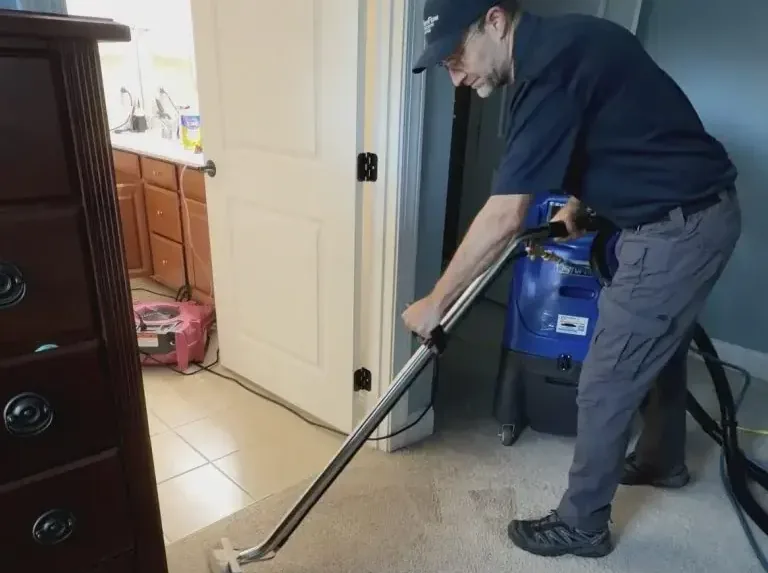 Water Extraction and Removal
Pumps and truck-mounted extractors pull standing water from carpet, tile and subfloors before moisture settles deeper.
See the service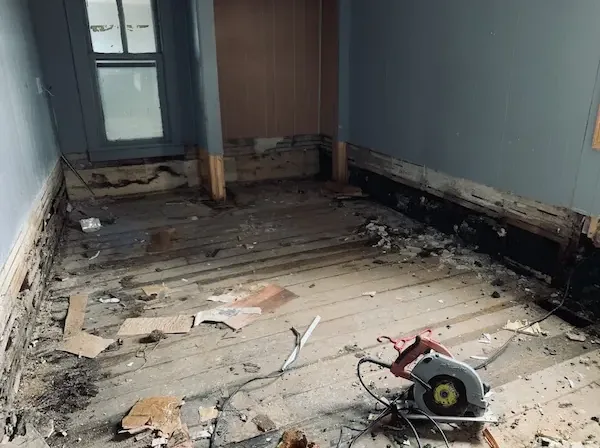 Burst Pipe Water Damage
Water from a burst pipe is extracted, then wet walls and ceilings are opened so the cavities dry.
See the service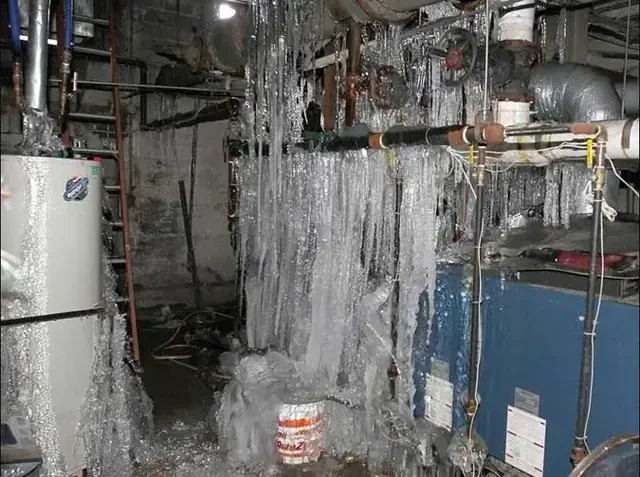 Frozen Pipe Water Damage
When a frozen pipe splits and thaws, the crew extracts the water and dries the walls, ceiling and subfloor.
See the service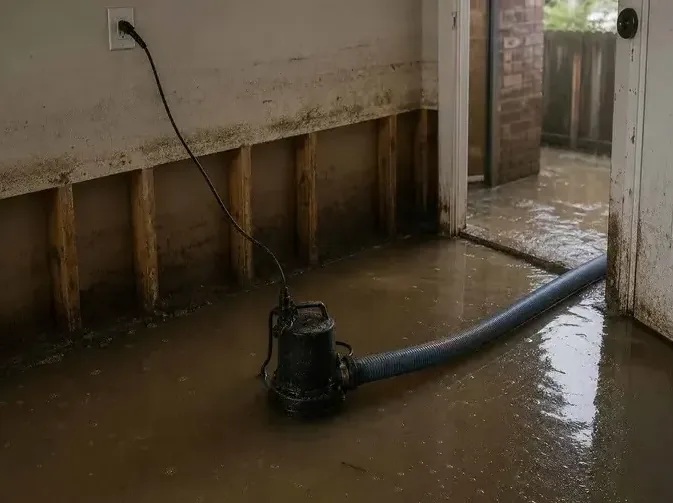 Flood and Storm Water Cleanup
Creek overflow and blocked storm drains bring water inside, so the crew pumps, clears silt and treats what the flood touched.
See the service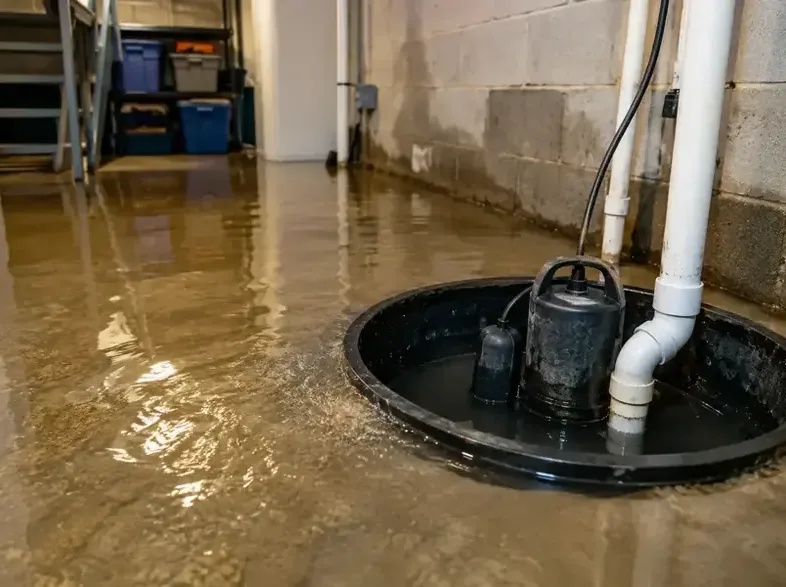 Basement Flooding Cleanup
A flooded lower level is pumped out, wet finishes are removed and the slab and walls are dried with dehumidifiers.
See the service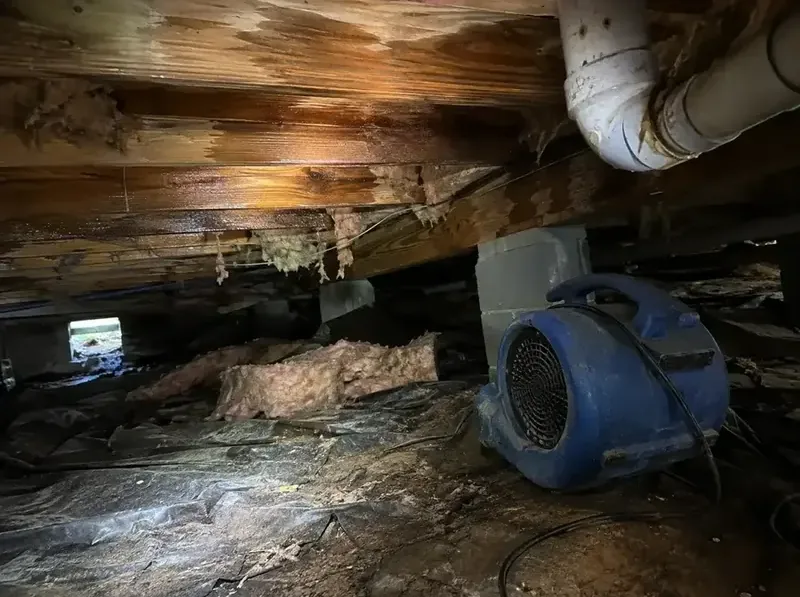 Crawl Space Water Removal
Water pooled under a raised floor is pumped out, wet insulation is pulled and the framing is dried with readings.
See the service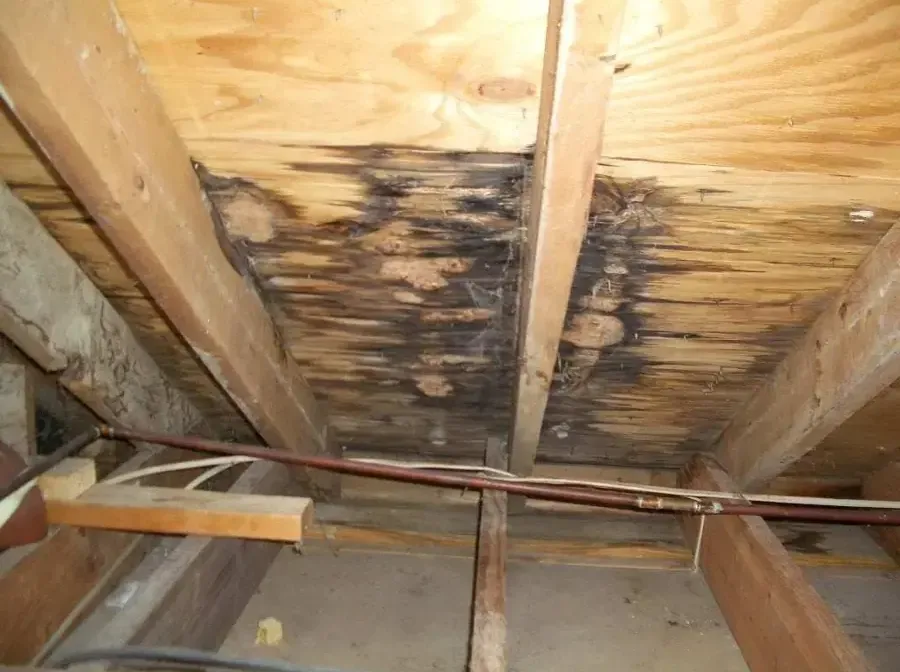 Roof Leak Water Damage
A roof leak soaks insulation and ceilings fast, so wet attic material comes out and the rooms below are dried.
See the service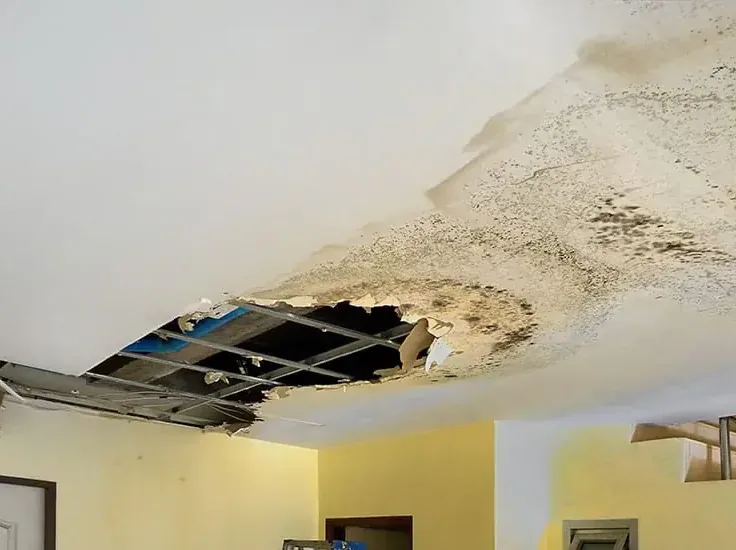 Ceiling Leak Water Damage
The source above the room is found and stopped, then wet drywall and insulation are removed and dried out.
See the service Water Heater Leak Cleanup
A failed tank floods the floor around it, and the slab, wall bottoms and nearby rooms are extracted and dried.
See the service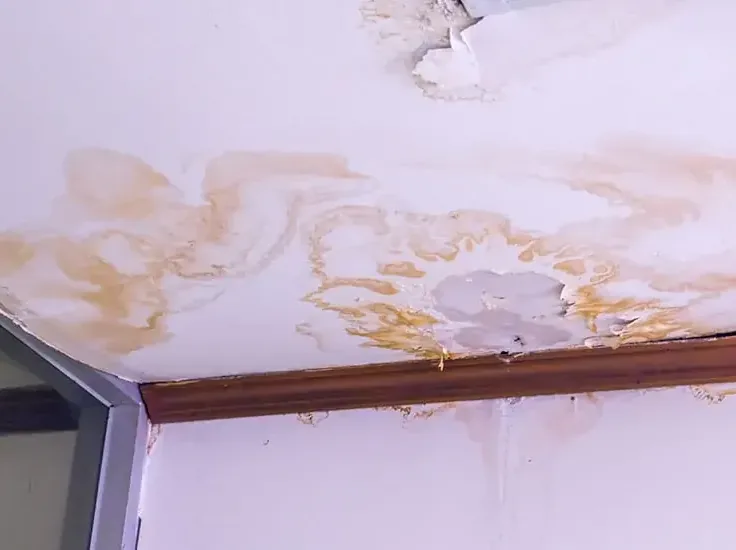 AC Condensate Leak Water Damage
A clogged condensate drain or overflowing pan sends water into ceilings and walls, which are opened and dried.
See the service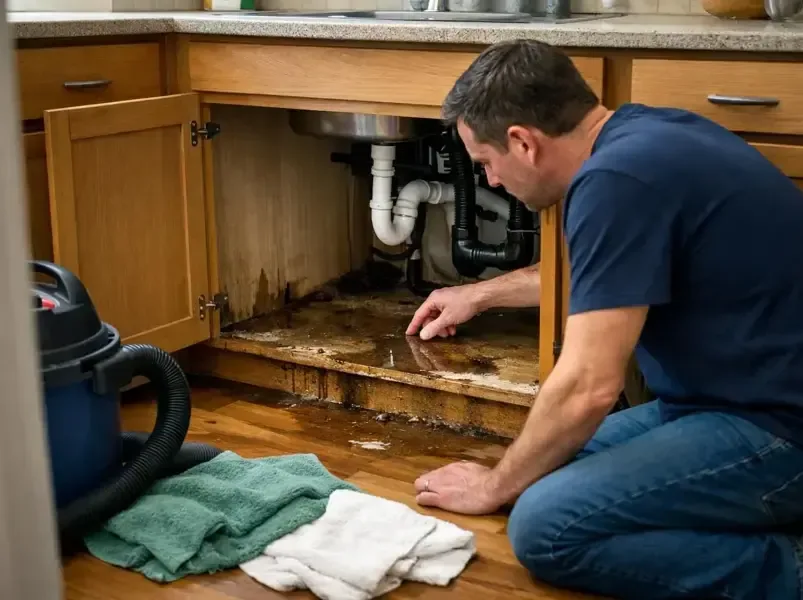 Appliance and Supply Hose Leaks
Leaking washer, dishwasher and refrigerator hoses soak floors and cabinets, so water is extracted and the area dried.
See the service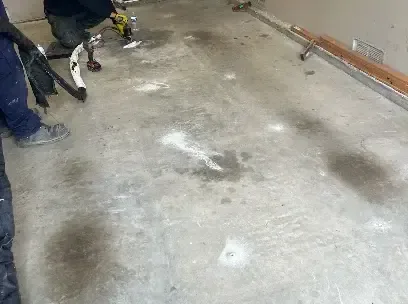 Slab Leak Water Damage
A pressure leak under the floor can wet rooms before a stain shows, so the crew traces it with readings.
See the service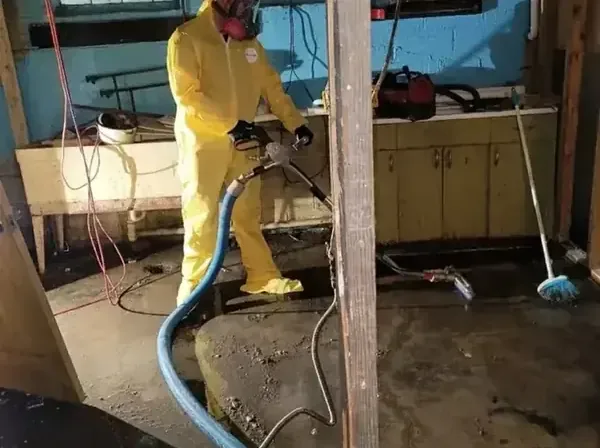 Sewage Backup Cleanup
Sewage backups get containment, removal of contaminated materials and antimicrobial cleaning before any drying begins.
See the service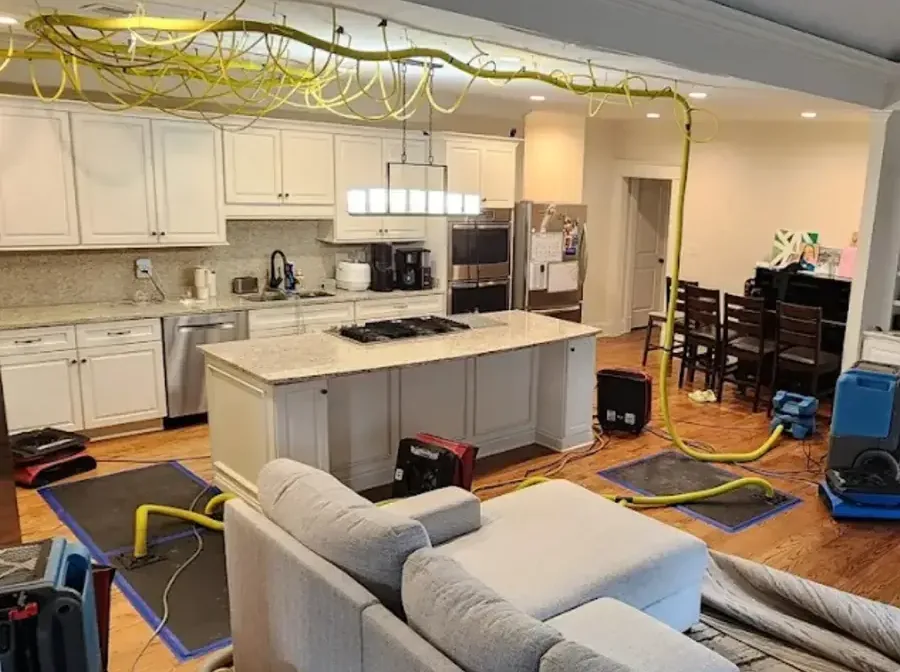 Structural Drying and Dehumidification
Air movers and dehumidifiers dry walls, floors and framing, and daily readings show when the structure is dry.
See the service Commercial Water Damage
Shops, offices and strip centers get phased drying plans that aim to keep the rest of the building working.
See the serviceWhat to do in the first moments after water appears
- 01Stop the water Close the main valve for a leak indoors, or the valve at the meter for one outside, and switch off power to wet areas only if it is safe to reach.
- 02Call the right people A sewer backup or a broken main pipe in the street also belongs with Cobb County emergency dispatch, while the crew handles the damage inside the home.
- 03Photograph everything Capture the source, the wet rooms and the damaged belongings before anything moves, because the claim file is built from those pictures.
- 04Lift what can be saved Move small furniture and electronics off wet floors and pull up soaked rugs, but leave wet drywall and carpet pad for the crew to remove.
Local water damage experts who document the work
The crew works from moisture readings instead of guesses, and it records every step for the homeowner and the adjuster.
Rapid local response
The extraction crew works close to home, so pumps, air movers and dehumidifiers go to work while the damage is still shallow.
Straight scope and price
Each plan names what is coming out, what stays and the price range, so the owner decides with the facts in hand.
Claim-ready documentation
Photos, moisture logs and equipment records are organized so an adjuster can follow the loss from the first reading to dry.
Local water know-how
The crew understands creek overflow, county water system calls and the way permits apply to flood repairs here.
How a dry-out is measured, not guessed
IICRC S500 practice sets the drying goal, and the crew compares daily psychrometric and moisture readings against the dry standard before any equipment leaves.
Assess
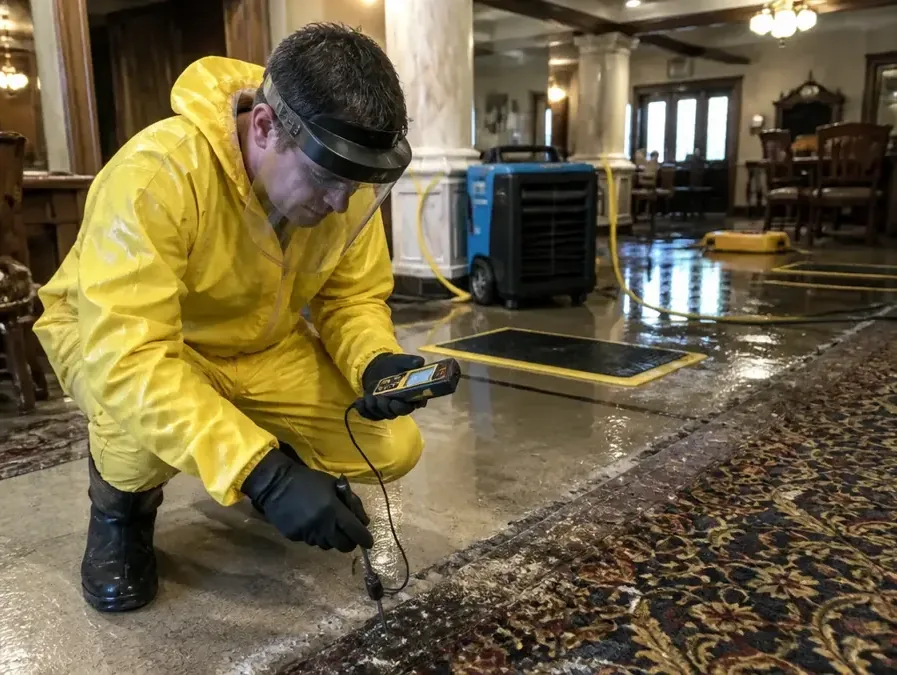
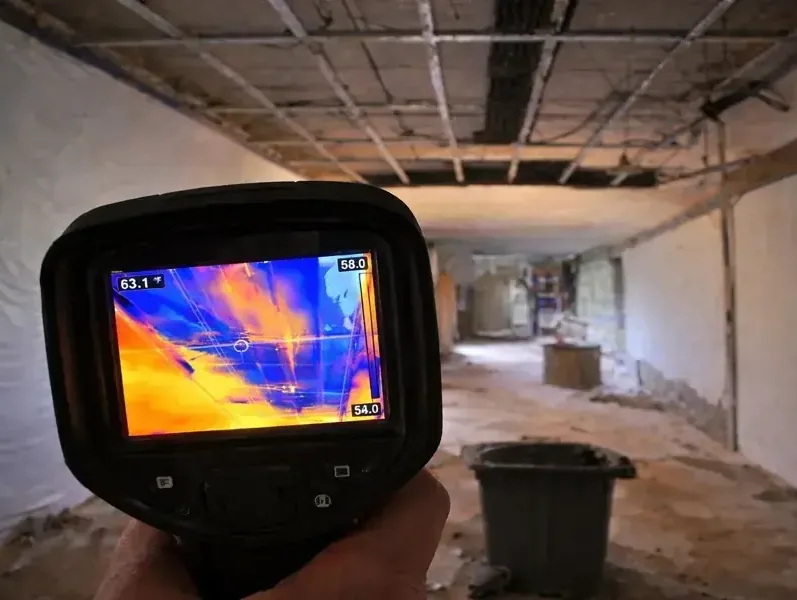
Moisture meters and a thermal camera map the wet area, the category of water and the materials that can be saved.
Remove the water
Pumps and truck-mounted extractors clear standing water, then wet carpet pad and soaked insulation are cut out and hauled away.
Dry the structure
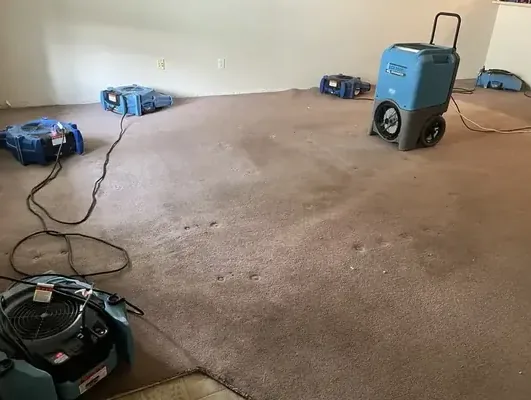
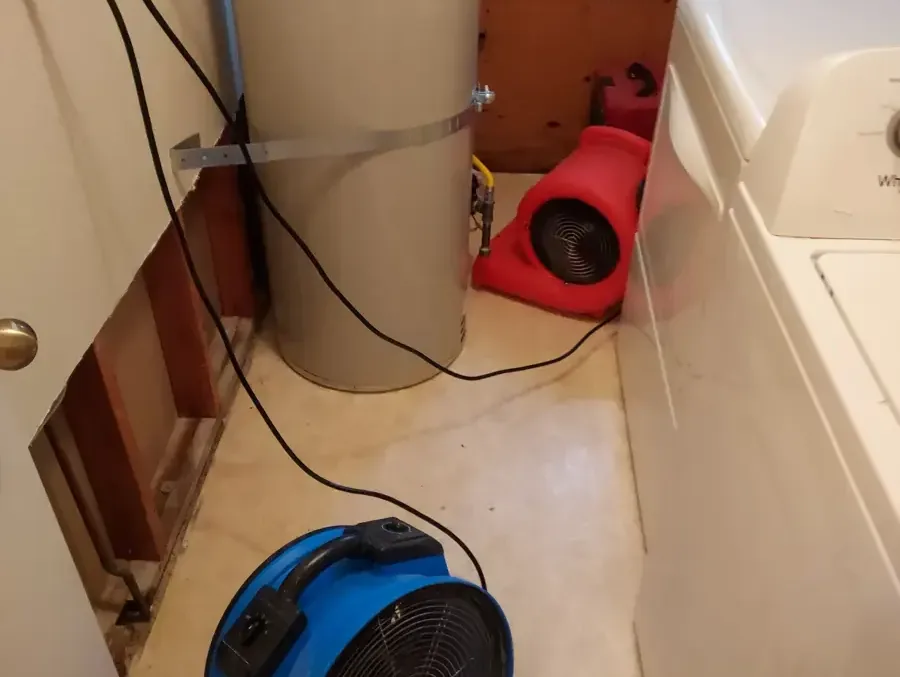
Air movers and LGR dehumidifiers run in a closed space while the crew rereads walls, floors and framing every day.
Confirm it is dry
Final readings meet the dry standard, the equipment comes out and the file goes to the owner with photos and logs.
Clean, gray and black water get different handling
Clean water
A supply pipe or failed fitting sends sanitary water into the home, and quick extraction gives the best chance to save flooring and drywall.
Burst pipe water damageGray water
A washer, dishwasher or sink overflow carries soap and light contamination, so wet porous materials are usually removed instead of dried in place.
Appliance and hose leaksBlack water
Sewage and creek floodwater carry bacteria, so the area is contained, porous materials come out and everything is cleaned before drying starts.
Sewage backup cleanupWhat water damage restoration usually costs
Cost follows how far the water spread, how long it sat and whether it was clean, gray or black, so the tiers below show three common loss sizes.
Small leak caught early, one area
- Truck-mounted water extraction
- One wall or room opened up
- Several days of dehumidifier drying
Several rooms or a second floor
- Ceilings and walls opened
- Wet insulation hauled away
- Daily moisture readings logged
Water ran for days
- Floors and cabinets removed
- Cleaning of every affected room
- Whole-floor drying with dehumidifiers
Ranges are estimates only. The written scope after the first readings sets the real price, and a homeowner's policy does not cover flood losses.
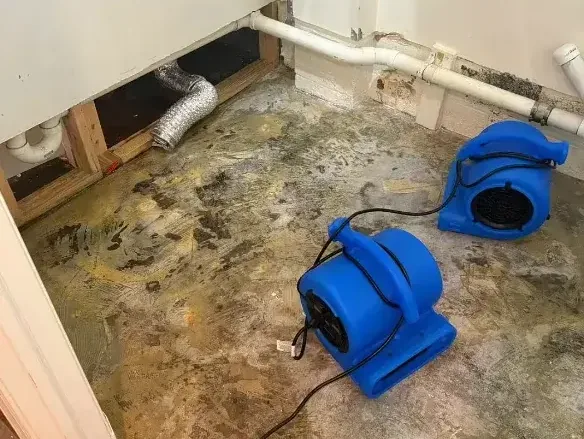
Try the water damage cost calculatorDrying equipment and moisture checks at work
Records the adjuster can follow
Clear records keep a water claim moving, because the adjuster needs proof of the source, the spread and the drying that followed.
- Dated photos of the leak source and each wet room
- Moisture readings from the first visit and each day after
- Daily drying logs with equipment counts
- Itemized scope tied to each affected room
- Notes on what was removed, what was kept and why
Know your flood zone status
The city says a homeowner's insurance policy does not cover flood losses, and flood insurance is mandatory for a structure inside a Special Flood Hazard Area.
Owners can call the city Community Development Department with a property address to learn whether it sits in that zone on the FEMA flood map, and permits are required for flood damage repair work.
Not sure the address is covered? Ask the crew
Streets, subdivisions and shopping centers around town are all fair game, so send the address and the crew confirms coverage before any equipment is loaded.
Cobb County Water System emergency dispatch handles main breaks out in the street.
(888) 532-4616Check my address with the crewWater damage help across Powder Springs
Corridors and neighborhoods
ZIP code
Nearby communities

What puts local homes at risk
Floodplains run throughout the city, and Powder Springs Creek and Noses Creek both carry USGS gauges that track the water as it rises. Blocked storm drains can flood a street too.
- Creek floods reach roads. The National Weather Service says a record crest, like September 2009, floods Sweetwater Avenue and Brownsville Road and puts about 3 feet of water in the Seven Springs Museum.
- Storm drains that back up. The city says localized flooding can happen where storm drains or channels are blocked, and flash floods can occur in spring, summer and fall.
- Sewers under strain. Grease that builds up in sewer pipes causes blockages that back up into homes, and the owner maintains the lateral from the house to the main.
- A county system now serves here. Cobb County Water System took over the city's water and sewer in June 2019, a sale that moved about 7,000 water and 5,600 sewer customers.
- Pipes that freeze. Cobb County's December 2024 notice warned that temperatures below 20 degrees Fahrenheit can damage pipes and that broken frozen pipes flood when they thaw.
September 21, 2009: Powder Springs Creek crested at 19.82 feet and floodwater closed Brownsville Road just west of downtown during what the city calls a historic flood.
Water damage questions from local homeowners
Need an answer about your own loss?
Describe the water, the rooms and the source, and the crew explains the first steps and what drying will involve.
(888) 532-4616 Ask the restoration teamWhat should a homeowner do first after a pipe bursts?
Close the main valve for an indoor leak, switch off power to wet areas if it is safe, photograph the damage and call a restoration crew before moving anything wet. Cobb County gives the same shutoff advice for an indoor leak.
Who handles a sewer backup, the county or the owner?
Cobb County asks residents to call its water system emergency dispatch about a sewer backup. The owner maintains the lateral from the home to the main, and the crew handles cleanup inside the building. Grease buildup is a frequent cause.
Does homeowner insurance cover creek flooding?
The city says a homeowner's policy does not cover flood losses. Flood insurance is mandatory inside a Special Flood Hazard Area, and the Community Development Department can say whether an address sits in one. Policies vary, so the owner should check the wording.
Do flood damage repairs need a permit in the city?
The city says permits are required for any flood damage repair work on a home, while routine maintenance such as painting and floor covering needs none. Applications go through the CommunityConnect portal.
How long does drying usually take?
A single wet area often needs three to five days of equipment, and larger losses run longer, and hardwood and concrete dry slowest. Daily readings decide when the equipment leaves, partly because mold can start within 24 to 48 hours.
Can a frozen pipe really flood a house?
Yes. Cobb County warned in December 2024 that broken frozen pipes flood when they thaw. It advises letting faucets near outside walls drip and opening cabinet doors under sinks.
Can wet carpet be saved after a leak?
The city advises removing wet carpet and padding as soon as possible. Clean water caught early may leave the carpet salvageable, but gray or black water means the carpet and pad are removed and hauled away.
Can the crew work inside an occupied shop or strip center?
Yes. Commercial jobs use phased plans, containment and unit by unit documentation, so tenants next door can keep working while the wet space is extracted and dried.
Why does the dehumidifier keep running after the water is gone?
Framing, subfloors and drywall hold moisture long after the surface looks dry. The equipment stays until the readings match the dry standard set at the start of the job.
What should a renter do after a leak?
Tell the landlord right away, photograph the damage and move belongings out of the wet area. Of 6,493 occupied homes counted by the American Community Survey, 1,142 are rented.
Water in the house? Get the drying started in Powder Springs.
Send the address and a short description of the damage, and the restoration team lays out the first steps and a price range.
(888) 532-4616Start the drying plan