Water Extraction and Removal in Mableton, GA
Standing water in a Mableton home, whether from a failed appliance, a burst pipe or heavy rain, is pumped and vacuumed out first so floors, walls and cabinets stop wicking moisture upward.
(888) 532-4616Request water removal help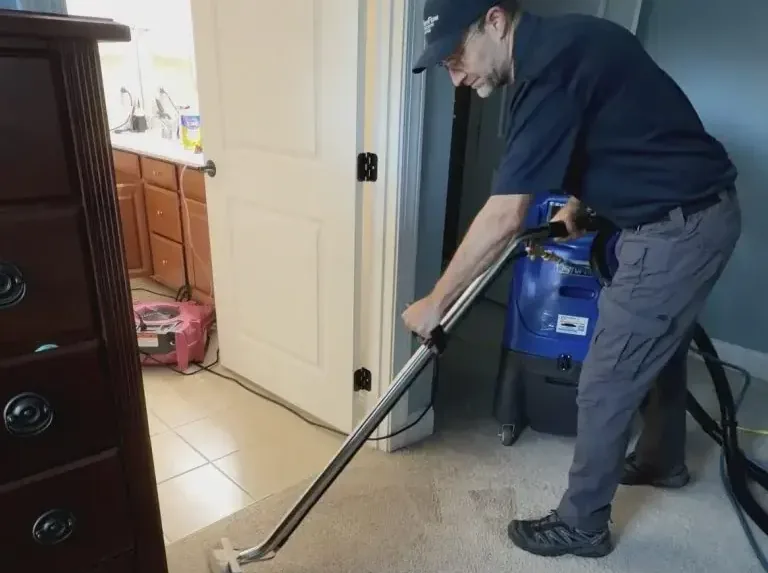
First steps for water extraction and removal in Mableton
- 01Stop the source Shut off the water at the valve or breaker for any wet appliance, and keep people and pets out of standing water near outlets.
- 02Move what you can Lift small furniture, rugs and electronics onto dry surfaces, and leave heavy pieces for the crew to handle.
- 03Photograph the damage Take wide and close photos of the wet areas, damaged contents and any visible source before anything is moved or thrown out.
- 04Skip the household vacuum A regular vacuum pushes water deeper into floors and is unsafe near wet outlets, so wait for professional extraction.
When water spreads across a floor, carpet pad, baseboards and the framing behind them start absorbing it right away. Extraction pulls out the bulk of that water mechanically, which is much faster than evaporation and takes a heavy load off the drying equipment that follows. In Mableton, the work begins with a quick survey of how far the water has traveled.
Rapid local response
Dispatch runs 24/7, and active water is treated as urgent, because it moves into subfloor and drywall within hours.
IICRC S500 drying standard
Moisture gets mapped first. Air movers and LGR dehumidifiers then run until the readings match a dry reference, not until the surface looks dry.
Claim-ready documentation
Daily moisture readings, psychrometric logs and timestamped photos taken before any demolition go into the file an adjuster reviews.
Local water know-how
Red clay, creek-side lots, crawl spaces, basements on sloped ground and attic equipment shape how water moves through homes in west Cobb.
What does water extraction and removal cost in Mableton, GA?
Water extraction usually costs between $500 and $9,000, depending on how many rooms are wet, how deep the water got and whether it is clean water or Category 3.
One room, caught early
- Carpet or hard floor extracted
- Pad checked and removed
- Edge moisture readings
Several rooms or a whole level
- Truck mounted extraction
- Wet pad hauled away
- Drying equipment set
Deep or Category 3 water
- Pumping before extraction
- Ruined flooring removed
- Containment and antimicrobial
Ranges are typical, never a quote: the category of water, square footage, material class and how fast drying started move the number most.
Work out a closer range in the cost calculatorHow water extraction and removal gets done, step by step
The tech who does the walkthrough maps moisture before any equipment goes down, so the plan matches what is actually wet. Equipment stays until the readings say dry.
Survey the water
The crew traces how far water has traveled and checks its category, since each type needs different handling.
Pump and extract
Deep water goes out through pumps, then extractors work carpet, pad and hard floors until the surface stops releasing water.
Open hidden spots
Baseboards and toe kicks come off where water hides, and wet pad is cut out so air can reach the subfloor.
Hand off to drying
Readings are recorded, and air movers and dehumidifiers take over while the crew documents the room for the claim.
What happens first
The extraction crew confirms the source is stopped, then removes standing water with truck mounted or portable extractors, working from the lowest point outward. Wet carpet is lifted at the edges so the pad can be checked, because pad behaves like a sponge and keeps water pressed against the subfloor long after the surface feels dry. Hard floors, vinyl and sealed wood are vacuumed in overlapping passes so no film of water is left behind.
- Shutoff and source confirmed before pumping starts
- Water pulled from carpet, tile, vinyl and sealed wood
- Saturated pad cut out and hauled away
- Readings taken at wall edges and under cabinets
Standing water in the house? Get it pumped out
(888) 532-4616Ask the extraction crew in MabletonWhen rain and creeks rise
Not every flooded room begins with a pipe. Nickajack Creek at Mableton set a record crest of 19.30 feet in September 2009, and the Chattahoochee River runs along the city's southeast border, so a hard rain can push water into garages, yards and ground floor rooms. Deep water is pumped first, vacuum passes follow once the floor is exposed, and the water category is noted because creek and river water is handled as contaminated.
Why method matters
Wet materials can start growing mold within 24 to 48 hours, so pulling the bulk of the water out quickly protects what can still be saved. Extraction leads straight into structural drying, with air movers, dehumidifiers and written readings, and the crew keeps photos for the insurance file. The same extraction service in Austell follows the same sequence of steps.
Water extraction and removal across Mableton and nearby towns
Extraction work runs across Mableton, from the homes near Concord Village and Vinings Estates to Heritage Lakes, with crews also working along Floyd Road, the East-West Connector and Veterans Memorial Highway.
The same service nearby: water extraction and removal in Austell, Smyrna, Powder Springs.
Water Extraction and Removal questions in Mableton, GA
Water still spreading?
Shut off the water if you can and keep clear of wet outlets. Dispatch runs 24/7.
(888) 532-4616 Ask the extraction crew in MabletonHow quickly should water be removed?
As quickly as possible, because wet pad, baseboards and framing keep absorbing water, and mold can begin growing within 24 to 48 hours.
Can a hardware store wet vacuum do the job?
It can handle a small spill, but a household unit leaves moisture in pad and subfloor and cannot reach water beneath cabinets. Truck mounted extractors remove far more water, which shortens drying.
What if the water came from a creek or river?
Creek and river water carries soil and bacteria, so it is treated as contaminated. Porous materials such as carpet and pad are usually removed rather than cleaned, and the area is sanitized before drying.
Does the carpet always have to go?
Not always. Clean water caught early can often be extracted and the carpet dried in place, while the pad is checked and replaced if needed. Contaminated water means removal.
What happens after the water is out?
Drying begins with air movers and dehumidifiers, and moisture readings are logged daily until the materials reach normal levels. The equipment side is covered under structural drying.
Will insurance pay for extraction?
Coverage depends on the policy and the cause. Sudden events such as a burst pipe or an appliance failure are often covered, and photos, readings and a written scope help support the claim.
Get the water out before it settles into the floor
Extraction, pad checks and drying are planned together, so the whole job is mapped out before the equipment is set.
(888) 532-4616Request water removal