Flood and Storm Water Cleanup in Douglasville, GA
Overnight rain has flooded Douglas County before, and the cleanup always starts the same way: pump the water out, remove what it soaked and dry the structure.
(888) 532-4616Get pumps to your flooded home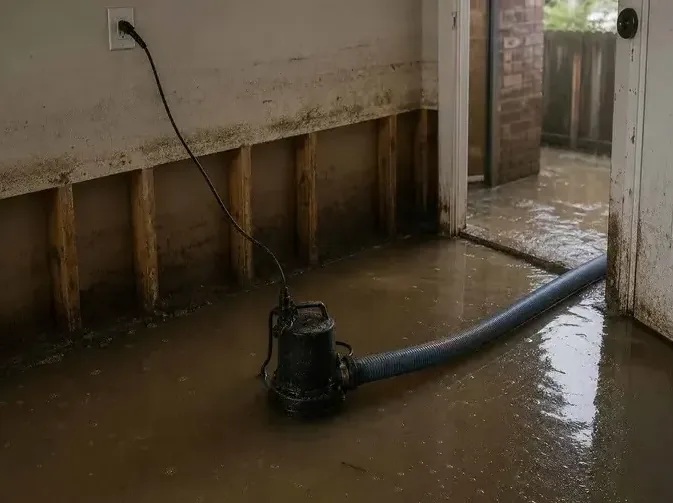
First steps for flood and storm water cleanup in Douglasville
- 01Stay out of the water Floodwater can hide electrical hazards and contamination, so keep people and pets out until power is off and the depth is known.
- 02Photograph the high mark Shoot the water level on walls and furniture, plus every ruined item, before pumping starts or the water drops.
- 03Save only safe items Lift photographs, papers and small valuables to higher ground, and leave soaked mattresses for the crew to assess.
- 04Call for pumping Give the depth, the rooms affected and whether the water is still rising, so the right pumps are sent.
Floodwater is different from a plumbing leak. It carries mud, bacteria and debris from outside, so it is treated as contaminated from the start. The goal is to get it out of the house, take out what cannot be cleaned, and dry the structure before anything else breaks down.
Rapid local response
Dispatch runs 24/7, and active water is treated as urgent, because it moves into subfloor and drywall within hours.
IICRC S500 drying standard
Moisture gets mapped first. Air movers and LGR dehumidifiers then run until the readings match a dry reference, not until the surface looks dry.
Claim-ready documentation
Daily moisture readings, psychrometric logs and timestamped photos taken before any demolition go into the file an adjuster reviews.
Local water know-how
Red clay, creek-side lots, crawl spaces, basements on sloped ground and attic equipment shape how water moves through homes in west Cobb.
What does flood and storm water cleanup cost in Douglasville, GA?
Storm flood cleanup ranges from about $3,000 for shallow water in one area to $45,000 when creek water covers a whole level, with mud, contamination and tear-out driving the cost.
One area, shallow water
- Pump-out and extraction
- Pad pulled, flood cuts made
- Antimicrobial applied
A lower level or several rooms
- Mud and silt shoveled out
- Drywall and insulation removed
- Containment and HEPA scrubbing
Creek water through the home
- Whole-level removal
- Cabinets and flooring torn out
- Long structural drying
Ranges are typical, never a quote: the category of water, square footage, material class and how fast drying started move the number most.
Work out a closer range in the cost calculatorHow flood and storm water cleanup gets done, step by step
The tech who does the walkthrough maps moisture before any equipment goes down, so the plan matches what is actually wet. Equipment stays until the readings say dry.
Assess the depth
The crew checks how high the water rose, which rooms it reached and whether power or gas needs to stay off.
Pump and clear
Pumps lower the water level, then silt, mud and debris are removed from floors, closets and wall bases.
Tear out and treat
Soaked drywall, insulation, pad and flooring are removed, and the framing is treated with antimicrobial.
Dry and document
Equipment runs until readings are dry, and photos, logs and the materials list go into the claim file.
What local floods have shown
In September 2009 extreme overnight rain flooded Douglas County, and Douglasville, Villa Rica, Austell, Lithia Springs and Chapel Hill were hit hardest. The governor declared a state of emergency and the county was later declared a disaster area. In April 2014, Fowler Field on Chapel Hill Road looked like a lake after a night of heavy rain.
- Pumps and extractors clear water from the lowest areas first
- Mud, silt and debris shoveled out and bagged before drying begins
- Carpet, pad and soaked drywall removed because they cannot be reliably cleaned
- Antimicrobial treatment applied to framing and surfaces that stay in place
Flood water in the house? Get the pump crew started.
(888) 532-4616Douglasville flood cleanup helpDrying after the water is gone
Once the mud is out and the damaged materials are removed, the structure still holds water. Air movers, LGR dehumidifiers and HEPA air scrubbers run until moisture readings in framing and subfloor reach a dry standard, which can take longer after a flood than after a leak. The method is covered in structural drying.
Checking your flood risk
Georgia's DFIRM flood map tool lets anyone type in an address and see that property's flood risk. Standard homeowners policies generally exclude rising water, so a separate flood policy matters, and the crew documents everything either way.
Flood and storm water cleanup across Douglasville and nearby towns
Storm flood crews work across Douglasville and the surrounding county, from Chapel Hill Road and the Douglas Boulevard Corridor to the streets around Hunter Park and the neighborhoods north of downtown.
The same service nearby: flood and storm water cleanup in Austell, Mableton, Powder Springs.
Related water damage services in Douglasville
Flood and Storm Water Cleanup questions in Douglasville, GA
Water still spreading?
Shut off the water if you can and keep clear of wet outlets. Dispatch runs 24/7.
(888) 532-4616 Douglasville flood cleanup helpIs floodwater always treated as contaminated?
Water that enters from outside carries mud, bacteria and debris, so it is handled as Category 3. That means protective gear, removal of porous materials and antimicrobial treatment.
Does flood damage come under homeowners insurance?
Standard homeowners policies generally exclude rising water, which is covered by a separate flood policy. Water from a burst pipe or a failed hose is a different claim, and the crew documents both.
How can I check whether an address is flood-prone?
The DFIRM tool is Georgia's flood map lookup, and it returns the risk for a specific address. It is a useful check before buying a home or a flood policy.
What happens to belongings after a flood?
Hard items such as glass and metal can often be cleaned, while mattresses, upholstery and anything porous that touched floodwater is usually discarded. The crew notes what is removed for the claim.
How long does flood drying take?
More water means more time. A shallow flood may need several days of equipment, and a whole-level loss can run longer, with readings telling the crew when each area is dry. Flooded lower levels are covered under basement flooding cleanup.
Pump it out, then dry it right
Tell the crew how deep the water got and which rooms it reached, and pumping, tear-out and drying can be planned together.
(888) 532-4616Start the flood response