Structural Drying and Dehumidification in Austell, GA
Surfaces dry in a day; framing, subfloor and concrete do not. The drying team runs air movers and LGR dehumidifiers until every wet material reads like a dry reference.
(888) 532-4616Walls still damp after the leak? Get the drying going.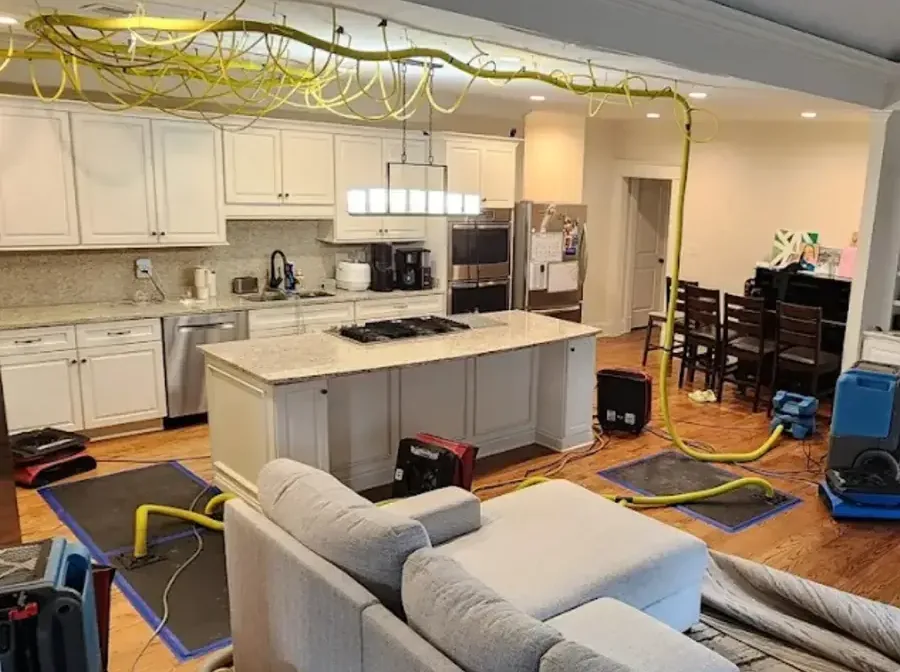
First steps for structural drying and dehumidification in Austell
- 01Keep the house closed Close windows in humid weather; outside summer air adds moisture to the drying.
- 02Run the AC if it works Air conditioning removes moisture from the air while the drying team is on the way.
- 03Do not repaint or close up Painting or installing flooring over wet materials traps the water in.
- 04Leave equipment running Turning off air movers or dehumidifiers at night slows the dry-out and skews the readings.
Structural drying is the part of a water loss nobody sees and every claim depends on. Water that soaked into studs, subfloor, block walls and concrete stays there after the floors look dry. In Austell's humid summers the air itself carries a lot of moisture, so drying here depends on dehumidification as much as on moving air.
Rapid local response
Dispatch runs 24/7, and active water is treated as urgent, because it moves into subfloor and drywall within hours.
IICRC S500 drying standard
Moisture gets mapped first. Air movers and LGR dehumidifiers then run until the readings match a dry reference, not until the surface looks dry.
Claim-ready documentation
Daily moisture readings, psychrometric logs and timestamped photos taken before any demolition go into the file an adjuster reviews.
Local water know-how
Red clay, creek-side lots, crawl spaces, basements on sloped ground and attic equipment shape how water moves through homes in west Cobb.
What does structural drying and dehumidification cost in Austell, GA?
In Austell, GA, structural drying typically runs $1,200 to $8,000, depending on the class of loss, the number of rooms and how long dense materials like hardwood, block and concrete need equipment.
Class 1 or 2, one area
- Air movers and LGR dehumidifier
- Three to five days
- Daily readings
Several rooms or Class 3
- Containment and more equipment
- Cavity drying
- Psychrometric logs
Class 4 or a whole level
- Desiccant dehumidification
- Hardwood and concrete drying
- Extended monitoring
Ranges are typical, never a quote: the category of water, square footage, material class and how fast drying started move the number most.
Work out a closer range in the cost calculatorHow structural drying and dehumidification gets done, step by step
The tech who does the walkthrough maps moisture before any equipment goes down, so the plan matches what is actually wet. Equipment stays until the readings say dry.
Map and classify
The tech maps moisture, picks a dry reference and sets the class of loss.
Set the equipment
Air movers, LGR dehumidifiers or desiccants and containment go in, sized to the rooms.
Read and adjust daily
Psychrometric and material readings are logged and equipment is moved as areas dry.
Confirm dry
Equipment comes out when materials read within 2 to 4 points of the dry reference.
How the drying is set up
- Moisture map: meters and thermal imaging mark every wet area and a dry reference in the same home
- Class of loss: Class 1 to 4 sets how much equipment a room needs
- Air movers: placed to the evaporation load of each room, aimed along wet walls and floors
- Dehumidifiers: LGR units for most losses, desiccants for dense materials and cooler spaces
- Containment: plastic walls that keep the drying area small and efficient
Still damp days after the water is gone?
(888) 532-4616Have the framing dried to readingsReading the drying, every day
The drying team logs temperature, relative humidity and grains per pound inside and outside the drying area each day, along with readings on every wet material. Those psychrometric logs show the drying is working and tell the tech when to add, move or remove equipment. The job ends when materials read within 2 to 4 points of the dry reference, not on a set date. OSHA flood cleanup guidance covers worker safety during this kind of work.
Materials that take longer
Hardwood floors, plaster walls, concrete block and slabs hold water deep inside and release it slowly. Hardwood gets drying mats or panels, cavities get injected air, and concrete gets more dehumidification over more days. For water that came in from outside, the structure is cleaned before drying starts; see flood and storm water cleanup.
Structural drying and dehumidification across Austell and west Cobb
Austell Water Damage Restoration covers ZIP 30106 and 30168, from Downtown and Broad Street and the homes along Sweetwater Creek out to Clarkdale, Floyd Road, Hicks Road, Maxham Road and the apartment blocks off Thornton Road.
Nearby coverage reaches Mableton, Powder Springs, Lithia Springs, Douglasville, Smyrna and Marietta.
Related water damage services
Structural Drying and Dehumidification questions in Austell, GA
Water still spreading?
Shut off the water if you can and keep clear of wet outlets. Dispatch runs 24/7.
(888) 532-4616 Have the framing dried to readingsWhat is structural drying?
Drying the building itself: framing, subfloor, drywall, block and concrete. It goes beyond drying the surfaces you can see and is verified with meters.
What is an LGR dehumidifier?
A low grain refrigerant dehumidifier pulls more water out of the air than a household unit, even when the air is already fairly dry, which keeps wet materials giving up moisture.
How long does structural drying take?
A contained Class 1 loss usually dries in three to five days when drying starts quickly. Hardwood, plaster, block and concrete take longer.
Why does humidity matter so much?
Wet materials only dry into air that can take the water. Humid summer air slows that, so dehumidifiers keep the air inside the drying area dry.
Can I turn the equipment off at night?
It is best not to. Drying is planned around continuous operation, and turning it off adds days and can let moisture move back into materials.
Is structural drying covered by insurance?
When the water loss is covered, drying is usually part of the mitigation portion of the claim. Coverage depends on your policy, so check with your own insurer.
Walls and floors still wet? Get them dried to the standard.
Water hiding in framing, subfloor and concrete stays put without the right equipment. The drying team runs it until the readings say dry.
(888) 532-4616Run the dry-out to the S500 goal