Water Extraction and Removal in Austell, GA
Standing water keeps soaking into pad, drywall and framing until it is pulled out. The extraction crew removes it with truck-mounted and portable units, then sets up the drying.
(888) 532-4616Standing water on the floor? Get it pulled out now.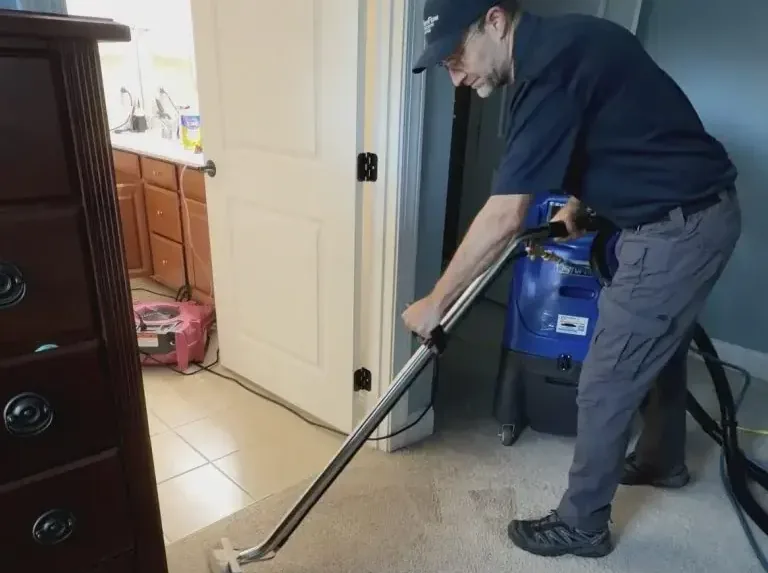
First steps for water extraction and removal in Austell
- 01Stop the water Close the main shutoff or the valve at the fixture, and switch off breakers for any room with standing water.
- 02Stay off wet carpet Walking on soaked carpet pushes water deeper into the pad and tracks it into dry rooms.
- 03Lift what stains Move rugs, papers and furniture with dyed or metal legs off the wet floor, onto blocks or foil.
- 04Leave the big volume to extraction A household wet vac pulls a few gallons at a time. Truck-mounted extraction pulls the rest far faster.
Extraction is the cheapest drying there is. A truck-mounted unit removes far more water in an hour than air movers can evaporate in a day, so the extraction crew pulls every gallon it can reach before drying equipment goes down. In Austell that often means a basement floor, a crawl space or a carpeted main floor after a pipe or water heater failure.
Rapid local response
Dispatch runs 24/7, and active water is treated as urgent, because it moves into subfloor and drywall within hours.
IICRC S500 drying standard
Moisture gets mapped first. Air movers and LGR dehumidifiers then run until the readings match a dry reference, not until the surface looks dry.
Claim-ready documentation
Daily moisture readings, psychrometric logs and timestamped photos taken before any demolition go into the file an adjuster reviews.
Local water know-how
Red clay, creek-side lots, crawl spaces, basements on sloped ground and attic equipment shape how water moves through homes in west Cobb.
What does water extraction and removal cost in Austell, GA?
In Austell, GA, water extraction typically runs $500 to $4,500, depending on the volume of water, the floor area and whether a basement or crawl space is involved; drying adds to that.
Single room, caught early
- Extraction of carpet or hard floor
- Pad check and removal if needed
- Moisture readings at the edges
Several rooms or a basement
- Truck-mounted extraction
- Pad removal and disposal
- Drying setup after extraction
Deep water or Category 3
- Pumping before extraction
- Removal of contaminated flooring
- Containment and antimicrobial
Ranges are typical, never a quote: the category of water, square footage, material class and how fast drying started move the number most.
Work out a closer range in the cost calculatorHow water extraction and removal gets done, step by step
The tech who does the walkthrough maps moisture before any equipment goes down, so the plan matches what is actually wet. Equipment stays until the readings say dry.
Find the edges
Meters and thermal imaging show where the water reached under baseboards and into the next room.
Extract
The extraction crew runs truck-mounted units over carpet and hard floors and pumps low spots in basements and crawl spaces.
Remove what cannot dry
Saturated pad, wet insulation and anything touched by Category 3 water comes out and goes to disposal.
Set the drying
Air movers and LGR dehumidifiers go in, sized to the rooms, with readings logged every day.
What extraction removes, and what it leaves
Extraction takes out the water that has not soaked in yet: standing puddles, the water held in carpet and pad, and water pooled on concrete or under a raised floor. It cannot pull water that has already soaked into drywall, framing or a slab. That bound water comes out with air movers and dehumidifiers over the following days.
- Truck-mounted units for large volumes and long hose runs into basements
- Portable extractors for upper floors, apartments and tight crawl space entries
- Weighted extraction tools that press water out of carpet pad
- Submersible pumps when water is deeper than a few inches
Standing water in the house right now?
(888) 532-4616Have the standing water pulled up tonightCarpet, pad and hard floors
With clean water caught early, carpet can often be extracted and dried in place, and the pad decides the outcome. Pad holds water like a sponge and usually gets replaced even when the carpet is saved. Gray water means the pad comes out. Category 3 water means the carpet and pad both go.
Hardwood, laminate and vinyl plank trap water underneath. The tech checks the subfloor with meters before deciding whether a floor can be dried with mats or has to come up. The EPA's indoor air quality pages explain why damp building materials should be dried quickly.
Basements and crawl spaces
Many homes here sit on sloped lots with basements, or on crawl spaces under postwar ranches. Water in either place runs to the lowest point and stays there, because red clay outside gives it nowhere to go. The extraction crew pumps the low point, extracts finished floors and pulls wet insulation from between the joists before drying starts.
- Finished basements: see basement flooding cleanup
- Water under a raised floor: see crawl space water removal
- Water that came in from outside: Ready.gov flood safety advice covers what to avoid before cleanup
Water extraction and removal across Austell and west Cobb
Austell Water Damage Restoration covers ZIP 30106 and 30168, from Downtown and Broad Street and the homes along Sweetwater Creek out to Clarkdale, Floyd Road, Hicks Road, Maxham Road and the apartment blocks off Thornton Road.
Nearby coverage reaches Mableton, Powder Springs, Lithia Springs, Douglasville, Smyrna and Marietta.
Related water damage services
Water Extraction and Removal questions in Austell, GA
Water still spreading?
Shut off the water if you can and keep clear of wet outlets. Dispatch runs 24/7.
(888) 532-4616 Have the standing water pulled up tonightHow much water can extraction remove?
Extraction removes the water that has not soaked in yet: standing water and the water held in carpet, pad and porous surfaces. Water already absorbed into drywall, framing or concrete comes out during structural drying.
Can my carpet be saved after extraction?
Often, when the water was clean and extraction started quickly. The pad usually gets replaced. Carpet touched by gray water may be saved after cleaning, but Category 3 water means the carpet and pad both come out.
Why not just use a wet vac and fans?
A wet vac moves a few gallons at a time and box fans only move air around. Without extraction and dehumidification, water stays in the pad, subfloor and wall bottoms, and drying takes far longer.
How long does extraction take?
Most rooms take a few hours. Large basements, deep water or several floors take longer, and the drying that follows usually runs three to five days for a contained loss.
Is standing water in a basement dangerous?
It can be. Keep out if outlets, cords or appliances sit near the water, or if the water came from outside or up through a floor drain. Shut off power at the panel only if you can reach it from a dry spot.
Does insurance pay for water extraction?
When the loss is covered, extraction is usually part of the mitigation portion of the claim. Coverage depends on your policy and the source of the water, so check with your own insurer.
Water on the floor? Get it out before it soaks in.
Every hour of standing water pushes it deeper into pad, drywall and framing. The extraction crew pulls it out and sets up the drying.
(888) 532-4616Pull the standing water out now