Structural Drying and Dehumidification in Mableton, GA
Removing the water is only half the job. In Mableton, the drying team sets air movers and dehumidifiers and tracks readings until walls, floors and framing are truly dry.
(888) 532-4616Request drying equipment help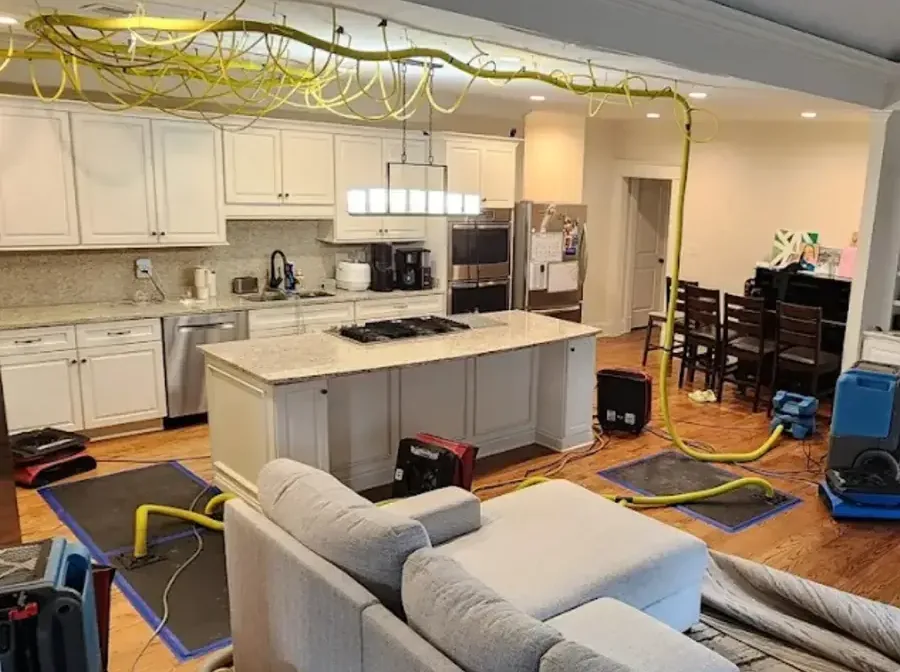
First steps for structural drying and dehumidification in Mableton
- 01Stop the source Make sure the leak or intrusion is fixed, since drying equipment cannot keep up with new water.
- 02Let the machines run Keep the equipment running with doors and windows closed, and do not move or switch it off.
- 03Keep the readings Save the daily logs and photos, which show the insurer why the equipment stayed as long as it did.
- 04Know when it ends Equipment leaves when readings match dry reference materials, not when surfaces simply feel dry.
Visible water is only part of a water loss. Moisture soaks into drywall, framing, subfloor and concrete, and it stays there until it is moved out into the air and removed. Structural drying does that on purpose, with equipment placed by measurement rather than guesswork.
Rapid local response
Dispatch runs 24/7, and active water is treated as urgent, because it moves into subfloor and drywall within hours.
IICRC S500 drying standard
Moisture gets mapped first. Air movers and LGR dehumidifiers then run until the readings match a dry reference, not until the surface looks dry.
Claim-ready documentation
Daily moisture readings, psychrometric logs and timestamped photos taken before any demolition go into the file an adjuster reviews.
Local water know-how
Red clay, creek-side lots, crawl spaces, basements on sloped ground and attic equipment shape how water moves through homes in west Cobb.
What does structural drying and dehumidification cost in Mableton, GA?
Structural drying generally costs $1,200 to $18,000, driven by the water class, the number of wet rooms and how many days the equipment must run before the readings flatten out.
Class 1 or 2, one area
- Air movers and LGR unit
- Three to five days
- Daily readings
Several rooms or Class 3
- Containment and more units
- Cavity drying
- Psychrometric logs
Class 4 or a whole level
- Desiccant dehumidifying
- Hardwood and concrete dried
- Extended monitoring
Ranges are typical, never a quote: the category of water, square footage, material class and how fast drying started move the number most.
Work out a closer range in the cost calculatorHow structural drying and dehumidification gets done, step by step
The tech who does the walkthrough maps moisture before any equipment goes down, so the plan matches what is actually wet. Equipment stays until the readings say dry.
Measure the loss
Meters and a thermal camera map moisture in walls, floors and ceilings before any machine is placed.
Set the equipment
Air movers, dehumidifiers and any desiccant units are placed by room size, class and water type.
Monitor daily
Readings are taken every day, equipment is moved or removed as areas dry, and the plan is adjusted.
Declare it dry
Final readings are compared with reference materials, and the logs are saved for the file.
Equipment and readings
A drying plan is built from the room size, the water type and what the materials are made of. Equipment is added or moved as the readings change, so the setup on day three rarely matches day one.
- Air movers push dry air across wet surfaces
- LGR dehumidifiers pull water out of the air
- Desiccant units handle dense hardwood and concrete
- Meters and psychrometric logs track progress each day
Walls still damp after the water is out?
(888) 532-4616Mableton drying helpPermits and repairs afterward
Drying often reveals framing or plumbing that has to be repaired. In the City of Mableton, building permits and inspections run through the Building Division of the Community Development Department, and applications go through the Cloud Permit online portal. The drying team documents moisture conditions so contractors and inspectors work from the same facts.
Classes of water loss
Class 1 and 2 losses involve limited wet material and moderate evaporation, while Class 3 soaks walls and ceilings from above and Class 4 involves dense materials like hardwood, plaster and concrete that release moisture slowly. The class sets the equipment count and the number of drying days, and the plan is adjusted daily. Extraction before drying is covered under water extraction.
Structural drying and dehumidification across Mableton and nearby towns
Structural drying covers Mableton homes and businesses from Ashton Park, Vinings Plantation and Concord Trace to Oakdale Bluffs and Providence, plus buildings along Veterans Memorial Highway and the East-West Connector.
The same service nearby: structural drying and dehumidification in Austell, Smyrna, Powder Springs.
Structural Drying and Dehumidification questions in Mableton, GA
Water still spreading?
Shut off the water if you can and keep clear of wet outlets. Dispatch runs 24/7.
(888) 532-4616 Mableton drying helpWhy are so many machines needed?
Wet materials release water slowly. Air movers speed evaporation from surfaces, and dehumidifiers remove the moisture from the air, so both are needed or the water just moves around.
Can the dehumidifier be turned off at night?
It should keep running. The cycle only works when the air stays dry, and shutting it down lets moisture drift back into walls and floors.
How long does drying take?
Three to five days is common for small losses, and Class 3 or 4 jobs often take longer. Daily readings, not a fixed schedule, decide the final day, and the largest events are covered under flood and storm cleanup.
Can hardwood floors be saved?
Often, if drying starts quickly with desiccant equipment and mats. Cupping and buckling are measured, and boards that stay out of range are replaced after the subfloor is dry.
Does drying prevent mold?
It removes the moisture mold needs. Growth can start within 24 to 48 hours on wet materials, so fast drying and daily readings are the main defense.
Who tracks the readings?
The drying team records them daily and shares the logs with the insurer. The numbers show when the structure has reached the dry standard and the equipment can leave.
Get the moisture out of the structure for good
The drying team places each machine by measurement, takes readings every day and records the dry standard, so repairs begin on framing that has truly finished drying.
(888) 532-4616Request structural drying