Water Extraction and Removal in Marietta, GA
When a storm, a failed supply pipe or an overflowing drain leaves standing water in a Marietta home, truck-mounted extractors pull it out before it settles into the structure.
(888) 532-4616Send an extraction crew out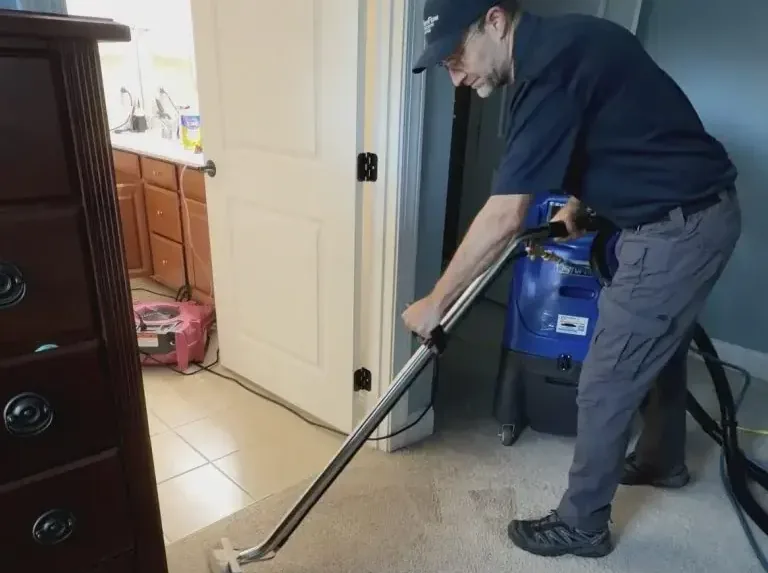
First steps for water extraction and removal in Marietta
- 01Stop the source Close the shutoff or the fixture valve, and keep people and pets out of deep water, especially near outlets.
- 02Photograph the water Capture the water level on walls and furniture, and keep damaged items for the adjuster.
- 03Lift small items Raise rugs, electronics and papers onto dry surfaces so extraction can reach the whole floor.
- 04Start extraction Pumps and extractors remove the water, then the crew checks pad, baseboards and subfloors for what remains.
Extraction is the first and most urgent step in any water loss, because standing water soaks into baseboards, carpet pad and drywall bottoms while it sits. In September 2021, flash flooding put water into many Marietta homes and businesses and into a police station basement, which shows how fast a wet floor becomes a wet structure.
Rapid local response
Dispatch runs 24/7, and active water is treated as urgent, because it moves into subfloor and drywall within hours.
IICRC S500 drying standard
Moisture gets mapped first. Air movers and LGR dehumidifiers then run until the readings match a dry reference, not until the surface looks dry.
Claim-ready documentation
Daily moisture readings, psychrometric logs and timestamped photos taken before any demolition go into the file an adjuster reviews.
Local water know-how
Red clay, creek-side lots, crawl spaces, basements on sloped ground and attic equipment shape how water moves through homes in west Cobb.
What does water extraction and removal cost in Marietta, GA?
Extraction cost depends on how deep the water is, how many rooms it reached and whether it is clean or contaminated. These are the three typical ranges for water removal alone.
One room, handled early
- Carpet or hard floor extraction
- Pad checked, removed if needed
- Edge moisture readings
Several rooms or a basement
- Truck-mounted extraction
- Pad removal and hauling
- Drying setup after extraction
Deep water or Category 3
- Pumping before extraction
- Contaminated flooring removed
- Containment and antimicrobial
Ranges are typical, never a quote: the category of water, square footage, material class and how fast drying started move the number most.
Work out a closer range in the cost calculatorHow water extraction and removal gets done, step by step
The tech who does the walkthrough maps moisture before any equipment goes down, so the plan matches what is actually wet. Equipment stays until the readings say dry.
Pump the deep water
Submersible pumps clear anything deeper than a few inches so the extractors can work on the floor surface.
Extract the surface
Truck-mounted units and wand tools lift water from carpet, tile and sealed floors in overlapping passes.
Check pad and edges
Pad, baseboards and wall bottoms are read with a moisture meter and removed where they cannot dry.
Hand off to drying
Readings and photos go to the drying team, who set air movers and dehumidifiers for the wet areas.
How the water comes out
The crew starts with pumps for deep water, then runs truck-mounted extractors and wand tools across carpet, tile and sealed floors until the surface stops giving up water. What happens next depends on what is wet, and the crew explains each removal before cutting anything out.
- Carpet is lifted and the pad is checked, since pad holds water and rarely dries well in place
- Hardwood and laminate get edge readings to see whether boards are trapping moisture underneath
- Baseboards are pulled or drilled for airflow where water wicked up the wall
- Furniture legs are blocked or removed from wet floors so nothing stains or swells further
Standing water in the house? Talk to an extraction crew about the plan.
(888) 532-4616Marietta extraction helpWhy speed matters
Water left in materials for a day or two gives mold a place to start, so extraction is paired with drying equipment as soon as the standing water is gone. Heavy rain is common here, with about 54.63 inches of precipitation in a year, and flood warnings named Noonday Creek during Tropical Storm Helene on September 27, 2024. Clean supply pipe water and storm runoff are handled very differently, because storm water carries mud and bacteria and is treated as contaminated, so anything that cannot be cleaned is removed.
What gets recorded
Each extraction is photographed before and after, and moisture readings are taken at the edges of every affected room. Those readings feed the same record kept by the structural drying team, so the adjuster sees one clear timeline from the first photo to the last reading. Bigger floods are covered under flood and storm water cleanup.
Water extraction and removal across Marietta and nearby towns
The extraction crew works homes and storefronts across ZIP 30060, from the historic streets near the Square and Whitlock Avenue to the Cobb Parkway corridor, with the same equipment and records on every job.
The same service nearby: water extraction and removal in Austell, Smyrna, Mableton.
Water Extraction and Removal questions in Marietta, GA
Water still spreading?
Shut off the water if you can and keep clear of wet outlets. Dispatch runs 24/7.
(888) 532-4616 Marietta extraction helpHow is standing water removed from a house?
Pumps take the deep water, then truck-mounted extractors with wand tools lift what is left from carpet, tile and sealed floors. Padding is checked and cut out if it is soaked, since it holds water.
Can wet carpet be saved after extraction?
Often yes when the water was clean and caught early, because the carpet can be extracted and dried in place. The pad underneath usually comes out, and carpet touched by contaminated water is removed instead.
Does extraction alone dry the house?
No. Extraction removes liquid water, but walls, subfloors and framing hold moisture that only air movers and dehumidifiers can pull out. The crew follows with drying and logs readings until the materials are dry.
What if the water came from a creek or a storm?
Storm and creek water counts as contaminated, so the crew wears protective gear, hauls out mud and removes porous materials that cannot be cleaned. Noonday Creek drew flood warnings during Tropical Storm Helene on September 27, 2024.
Who handles storm drains in the street?
Street storm drain problems go to the city's Public Works Department. The city's water utility covers supply and sewer service but not stormwater, and the extraction crew handles only the water inside the building.
What should be photographed before extraction starts?
Capture the waterline on walls, the wet floors and any damaged belongings before anything moves. Dated photos give the adjuster a baseline to compare with the extraction and drying records.
Get the water out before it spreads
The extraction crew removes standing water, checks the pad and baseboards and sets up drying so the structure stays sound.
(888) 532-4616Start the extraction