Basement Flooding Cleanup in Marietta, GA
A flooded lower level needs pumps, carpet removal and dehumidifiers without delay, and Marietta crews work to keep the water from spreading into block walls, slabs and the rooms above.
(888) 532-4616Pump out the basement now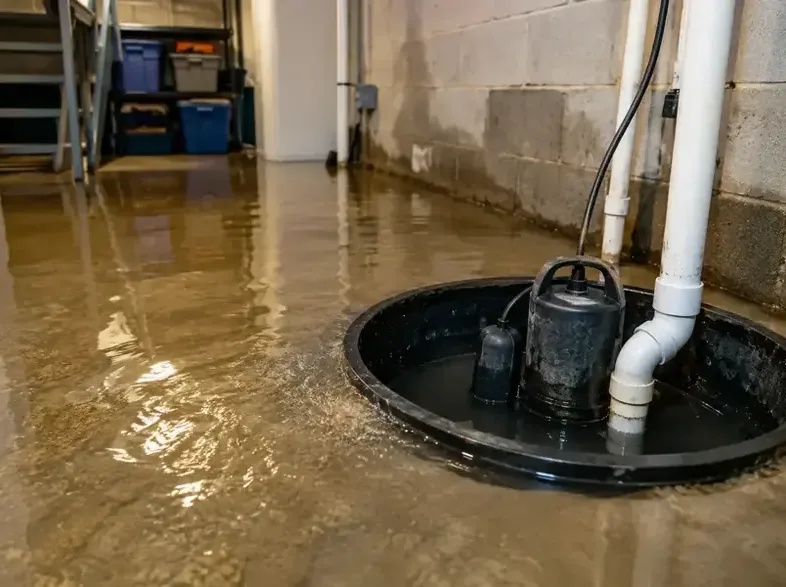
First steps for basement flooding cleanup in Marietta
- 01Stay off wet stairs Do not enter a flooded basement with live outlets or an energized panel, since standing water can carry current.
- 02Shut off the source Close the supply valve if a pipe failed, and note whether the sump pump is running.
- 03Record the waterline Photograph the water level, wet belongings and the walls before anything moves.
- 04Get pumps in A crew pumps the water out, removes soaked materials and sets up dehumidifiers for the whole level.
Water finds the lowest point, so a basement collects whatever comes in through a window well, a failed sump, a stairwell door or a broken pipe. Some buildings in Marietta have basements, including a police station whose basement flooded in September 2021 after a stream behind it overflowed.
Rapid local response
Dispatch runs 24/7, and active water is treated as urgent, because it moves into subfloor and drywall within hours.
IICRC S500 drying standard
Moisture gets mapped first. Air movers and LGR dehumidifiers then run until the readings match a dry reference, not until the surface looks dry.
Claim-ready documentation
Daily moisture readings, psychrometric logs and timestamped photos taken before any demolition go into the file an adjuster reviews.
Local water know-how
Red clay, creek-side lots, crawl spaces, basements on sloped ground and attic equipment shape how water moves through homes in west Cobb.
What does basement flooding cleanup cost in Marietta, GA?
Basement flood cost depends on whether the level is finished, how deep the water got and whether it was clean or contaminated. These ranges cover common jobs.
Unfinished level, shallow water
- Pump-out and extraction
- Block wall and slab drying
- Moisture checked daily
Finished basement
- Carpet and pad removal
- Flood cuts and insulation removed
- Dehumidifying the whole level
Deep or contaminated water
- Category 3 removal and cleaning
- Antimicrobial treatment
- Longer slab and block drying
Ranges are typical, never a quote: the category of water, square footage, material class and how fast drying started move the number most.
Work out a closer range in the cost calculatorHow basement flooding cleanup gets done, step by step
The tech who does the walkthrough maps moisture before any equipment goes down, so the plan matches what is actually wet. Equipment stays until the readings say dry.
Pump out
Pumps lower the water, then extractors clear the slab surface and any low spots along the walls.
Strip wet materials
Carpet, pad, lower drywall and wet insulation are removed and hauled out of the house.
Dehumidify the level
Dehumidifiers and air movers dry block walls, framing and the slab, with equipment adjusted each visit.
Verify and record
Moisture readings and photos show the level reached its dry points before rebuilding starts.
What happens first
Pumps go in before anything else, then extractors clear the floor surface. In a finished basement, the materials that soaked up the water come out next, and the crew explains what is being removed and why before any cutting starts.
- Carpet and pad are cut and hauled out
- Drywall is flood cut above the wet mark
- Insulation and wood trim that wicked water are removed
- Block walls and the slab are mapped with moisture meters
Water on the basement floor? Talk to a crew about pumps and drying equipment.
(888) 532-4616Ask about the basementDrying a lower level
Concrete and block dry slowly, so dehumidifiers do most of the work while air movers keep the surfaces moving. Readings are logged on each visit, because a damp basement that is closed up too early feeds odors and mold in the finished space above. Stairs, doors and trim are checked as well, since wood that wicked water can swell and warp long after the floor looks dry, and any equipment is moved or removed as the readings fall.
Why a lower level floods
Rain that cannot drain away, a sump pump that stops, a window well that fills or a pipe that fails can each put water on a basement floor. Storm flooding in September 2021 shows how fast that can happen, since many private homes and businesses flooded across the city, and the crew plans for rain, pipe and sewer causes alike.
When the water is contaminated
Water from a creek, a street or a backed-up sewer is contaminated, and the crew treats it that way with protective gear, containment and disinfecting. Owners dealing with sewage can read about sewage backup cleanup, and storm water jobs are covered under flood and storm water cleanup.
Basement flooding cleanup across Marietta and nearby towns
Basement and lower-level work covers properties across ZIP 30060, from the historic districts near the Square to buildings along Powder Springs Street and Macedonia Road, wherever a lower level has taken on water.
The same service nearby: basement flooding cleanup in Austell, Smyrna, Mableton.
Related water damage services in Marietta
Basement Flooding Cleanup questions in Marietta, GA
Water still spreading?
Shut off the water if you can and keep clear of wet outlets. Dispatch runs 24/7.
(888) 532-4616 Ask about the basementCan a finished basement be saved?
Often the structure and concrete can, but carpet, pad and lower drywall that sat in water usually come out. Pumping and drying promptly limits how much has to be replaced.
How is a basement different from a crawl space?
A basement has finished or usable space, so more materials are affected, while a crawl space is open framing and insulation. Both are pumped, cleared and dried with equipment matched to the space.
What if the water came from outside?
Water entering through a window well or door after heavy rain is treated as contaminated. The crew uses protective gear, removes porous materials and disinfects the surfaces that stay.
Does a sump pump failure count as a covered loss?
It depends on the policy, since sump overflow and sewer backup often need an added endorsement. Reading the policy and reporting the loss promptly are the first steps.
Why does the slab take so long to dry?
Concrete and block hold moisture deep inside, so surface readings can look fine while the slab is still damp. Dehumidifiers keep running until readings match dry reference points.
Get the lower level dry
The drying team pumps the water, removes wet carpet and drywall and runs dehumidifiers until the slab and walls are dry.
(888) 532-4616Plan the basement dry-out