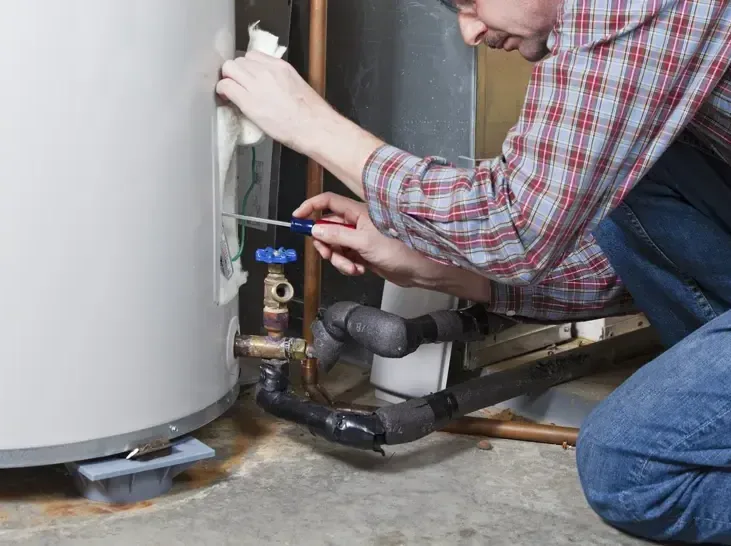
A water heater tank that starts to leak can empty onto a floor faster than a household can react. In Marietta, Georgia the next steps involve more than a mop: cleanup comes first, and the replacement needs a plumbing permit.
Key takeaways
- The city requires a plumbing permit for all work on a plumbing system, and water heaters are on its list.
- Contractors schedule water heater replacement inspections, and the homeowner must be available so the inspector can enter the home.
- The city moved to in-person inspections only, phasing out virtual inspections beginning November 1, 2024.
- Extraction and drying should begin before the replacement, because water left in floors and walls keeps spreading.
- Only 44.0 percent of housing units were owner-occupied in 2016 to 2020, so a leaking tank often involves both a tenant and a landlord.
How a tank leak shows up
A tank fails at a seam, a fitting or a relief valve, and the water follows the easiest path across the floor. Because a tank holds a lot of water, a small drip can become a flood in a short time.
The first sign is often not water at all but a sound or a stain. A hissing relief valve or a darkened ceiling below an attic tank can point to a leak that has been running for some time.
A leaking tank is replaced rather than patched, which makes a water heater leak a cleanup job and a plumbing job at the same time.
Tank water is clean when it leaves the tank, which helps: materials can usually be dried in place if the response is quick, unlike a flood or sewage loss.
- Water pooling at the base of the tank.
- Rust streaks on the tank or its fittings.
- A dripping relief valve discharge pipe.
- A damp closet floor, warped baseboards or a stained ceiling below.
Where the tank sits changes the damage
Where a tank sits often decides how big the loss is. A tank in a finished space sends water into more materials than one in an open utility area.
In a closet or a finished lower level, carpet and baseboards are the first materials to need removal.
Closets and utility rooms
A tank in a closet sends water into wall bases and under flooring in the rooms next to it. The wall cavities hold water long after the floor looks dry.
Garages, attics and basements
A garage tank spreads water across the floor, while an attic tank soaks insulation and the ceiling below. Some Marietta buildings have basements, where a tank leak pools low and soaks anything stored on the floor.
Marietta's plumbing permit rules
The city requires a plumbing permit for all work on a plumbing system. The list includes water supply, sewer, grease traps, gas piping and water heaters.
The permit list is broad enough that a plumber replacing a tank, a water supply pipe or a gas fitting falls inside it. The permit belongs to the plumbing job, so cleanup and plumbing run on separate tracks that meet at the inspection.
- Water heater replacement inspections are scheduled by the contractor.
- The homeowner must be available so the inspector can enter the home.
- Beginning November 1, 2024, Marietta moved to in-person inspections only, phasing out virtual inspections.
Getting ready for the inspector
The inspection is the last step of the plumbing job, and a few preparations keep it simple.
The contractor schedules it, but the household controls access to the home.
- Be home when the inspector arrives, since the inspector must enter the home.
- Clear the area around the tank so it can be reached.
- Keep the permit paperwork where the contractor and inspector can find it.
Owners, renters and who calls whom
In 2016 to 2020, 44.0 percent of Marietta housing units were owner-occupied, so most occupied homes were rented. A tenant who finds a leaking tank tells the landlord at once, and the landlord arranges the plumber.
Cleanup does not have to wait for the replacement. The tenant stops the supply if it is safe, the extraction crew removes the water while the plumber is scheduled, and drying starts as soon as the standing water is out.
In a rental home the roles split: the tenant gives access, and the landlord decides on repairs.
- Tenants: tell the landlord or manager and photograph the water.
- Owners: close the supply valve to the tank and call a plumber.
- Both: let the restoration team start extraction and drying.
What extraction and drying cover
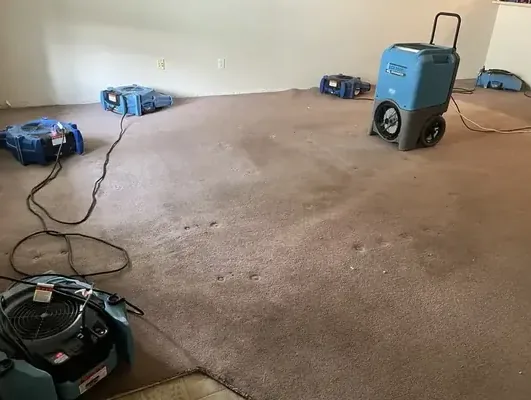
Water extraction removes the standing water, and wet padding, baseboard and insulation are pulled out where they are soaked. Fans and dehumidifiers then run until readings on the wall bases and the subfloor match a dry spot.
Readings mark the end of the job. A floor that feels dry can still hold water in the subfloor.
Cleanup starts as soon as the leak is found, and two details show up on most jobs:
- Wet baseboard is cut back so the wall base can dry.
- Subfloor and underlayment readings are taken before flooring is closed.
Signs a tank is nearing the end
Tanks give warnings before they fail, and a quick look can catch them.
A tank replaced before it fails means a plumbing job without a restoration job on top of it.
A plumber can assess a tank and advise on timing, and a scheduled replacement under a permit beats an emergency one.
- Rust colored streaks at the base or along fittings.
- A relief valve that drips or hisses.
- Rumbling or popping while the tank heats.
- Moisture or staining on the floor or the wall beside the tank.
Putting the jobs in order
The jobs run in a fixed order, and each one protects the next.
Keeping them in order avoids a common mistake, which is closing a wall over a wet cavity because the tank has been replaced. When one step slips, the others adjust: a delayed plumber does not delay extraction, and a delayed inspection does not stop drying.
The area overview is on the Marietta water damage hub.
- Stop the supply to the tank and turn off the power or gas that feeds it.
- Extract the water and remove soaked materials.
- Replace the tank under a plumbing permit, with the inspection scheduled by the contractor.
- Finish drying and close the walls only after readings are normal.
Questions
Does a water heater replacement need a permit in Marietta?
The city requires a plumbing permit for all work on a plumbing system, and its list includes water heaters.
Who schedules the inspection?
The contractor schedules water heater replacement inspections, and the homeowner must be available so the inspector can enter the home.
Are virtual inspections still available?
No. The city moved to in-person inspections only, phasing out virtual inspections beginning November 1, 2024.
Should the cleanup wait for the new tank?
No. Water left in the floor and walls keeps spreading, so extraction starts first while the replacement is scheduled.
Which materials are on the city plumbing permit list?
The list includes water supply, sewer, grease traps, gas piping and water heaters.
What should a tenant do first when a tank leaks?
Tell the landlord or manager, close the supply to the tank if it is safe and photograph the water before anything is moved.