A sewer backup does not need a flood to happen. If a fixture sits lower than the lowest manhole lid near the building, the City of Smyrna treats that location as susceptible, because sewage can rise through the lowest drain when the main fills.
Key takeaways
- Smyrna calls a location susceptible to sewer backup when a floor drain, toilet, shower drain or washing machine drain is lower than the lowest manhole lid near the structure.
- The International Plumbing Code and International Residential Code require a backwater valve on drainage serving one and two family homes when fixtures sit below the overflow relief point of the sewer main.
- The city reimburses owners in at-risk locations up to $600 for a backwater valve when they ask in writing before installation.
- The owner maintains the entire private sewer lateral, including its connection to the city sewer in the right-of-way, and the city makes repairs to the main.
- For a sewer backup, residents call City of Smyrna Public Works, and an emergency crew is sent.
When a fixture sits below the manhole
Which fixtures count
A floor drain in a utility room, a toilet or shower on a lower level and a washing machine drain are the usual places where a backup shows first, because they sit lowest in the plumbing.
The city names four examples of fixtures that can put a location at risk:
- A floor drain.
- A toilet.
- A shower drain.
- A washing machine drain.
Why height matters
Water finds its level. When a sewer main fills, the lowest openings in the system are the first to spill, and a fixture below the lowest manhole lid is one of them.
Heavy rain or a blockage downstream can fill a main well past its normal level, which is why the same house can go years without a problem and then back up in one storm.
Checking a location
A plumber can compare the lowest fixture with the lowest manhole lid near the structure. The comparison is simple, and it decides whether a valve is worth asking about.
- Find the lowest fixture in the building.
- Find the lowest manhole lid near the structure.
- Ask a plumber whether the fixture is lower.
What the backwater valve rule says
The International Plumbing Code and the International Residential Code require a backwater valve on drainage serving one and two family homes when fixtures sit below the overflow relief point of the sewer main.
A backwater valve is a one way device. It closes when flow reverses, so sewage cannot push back into the house, and it gives a low fixture protection that gravity alone cannot.
The city also reimburses owners in at-risk locations up to $600 for a backwater valve. The owner has to ask in writing before the valve is installed, and a plumber installs the valve at a point on the drain where it can protect the low fixtures.
- Ask for the reimbursement in writing first, before installation.
- The reimbursement applies to at-risk locations, as the city defines them.
- A plumber handles the installation itself.
Who owns which part of the sewer
The property owner maintains the entire private sewer lateral, including its connection to the city sewer in the right-of-way. The sewer main belongs to the city.
The city makes all repairs inside the right-of-way, because other utilities share that space. That split explains why a backup goes to Public Works first, and a plumber can tell which side of the connection holds the problem.
- Owner: the private lateral and its connection to the city sewer.
- City: the sewer main and repairs inside the right-of-way.
What to do when a backup starts
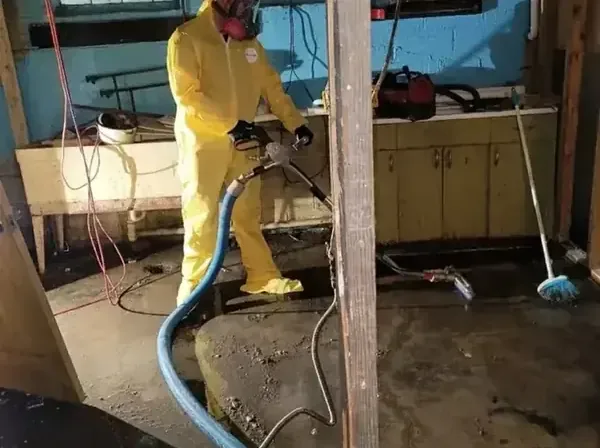
For a sewer backup, residents call City of Smyrna Public Works, and an emergency crew is sent. The crew handles the sewer; the restoration team handles the building through sewage backup cleanup.
While the crew works on the sewer, the household can limit the damage by keeping people away from the wet area and holding off on flushing and draining.
- Stop using sinks, tubs, toilets and washing machines to avoid pushing more water in.
- Keep children and pets away from the wet area.
- Photograph the water level on the floor and walls for the restoration team.
Staying safe around sewage
Sewage water carries contamination, so safety comes before cleanup. A crew wears protective gear, and a household can limit exposure with a few habits.
- Wear rubber boots and gloves if anything must be moved.
- Wash hands after any contact with the wet area.
- Keep food, dishes and toys out of the affected space.
- Leave porous items in place until they have been photographed.
- Do not mix cleaning chemicals, since bleach and other cleaners can react.
What sewage cleanup removes
Removal
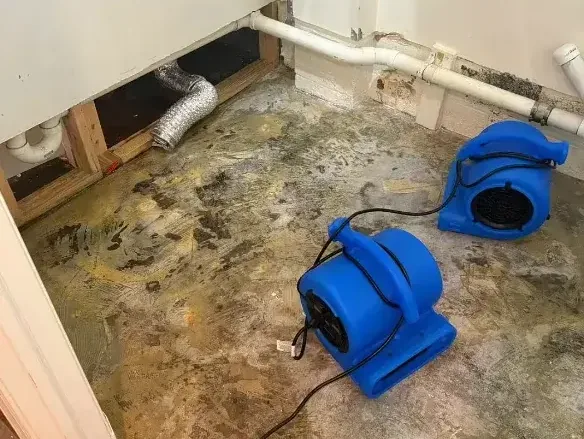
Sewage water is treated as contaminated, so soaked carpet, padding, insulation and drywall are removed rather than dried in place. The first pass is water extraction to take the standing water out.
- Soaked carpet, padding and insulation are removed.
- Drywall that wicked sewage water is cut back past the wet edge.
Sanitizing and drying
Hard surfaces and framing are cleaned and sanitized, and then the area is dried to moisture readings. The full scope runs from extraction through sanitizing and drying.
Clearing the drain and the trap is the plumber's job. The restoration team handles the building and everything the water touched.
A crew documents the affected area with photographs and readings before and after, so the owner has a record of what was removed and dried.
- Hard surfaces and framing are cleaned and sanitized.
- Readings confirm the area is dry before it is closed.
Preventing a repeat
A backwater valve addresses the specific path that sewage takes into a low fixture. A plumber can look at the drain and the cleanout and say whether a valve fits the location.
Pointing out a low fixture early lets a plumber and the city sort out the paperwork before the work starts, which keeps the reimbursement possible.
A short list of questions makes the plumber's visit more useful. If cleanup is also needed, the Smyrna water damage restoration hub lists each service by name.
- Is the lowest fixture below the lowest manhole lid near the structure?
- Is the cleanout easy to reach?
- Does a backwater valve fit the drain layout?
- What does the city need in writing before the work begins?
Questions
Who handles an emergency sewer backup in Smyrna?
Residents call City of Smyrna Public Works, and an emergency crew is sent.
How much does the city reimburse for a backwater valve?
Up to $600 for owners in at-risk locations, when they ask in writing before installation.
What makes a location at risk for a sewer backup?
The city calls a location susceptible when a floor drain, toilet, shower drain or washing machine drain is lower than the lowest manhole lid near the structure.
Who is responsible for the sewer pipe between the house and the street?
The owner maintains the entire private sewer lateral, including its connection to the city sewer in the right-of-way.
Is sewage cleanup different from other water cleanup?
Yes. Sewage water is contaminated, so porous materials are removed and surfaces are sanitized before the area is dried.
When should the reimbursement question be asked?
Before installation. The city reimburses up to $600 only when the owner asks in writing first.