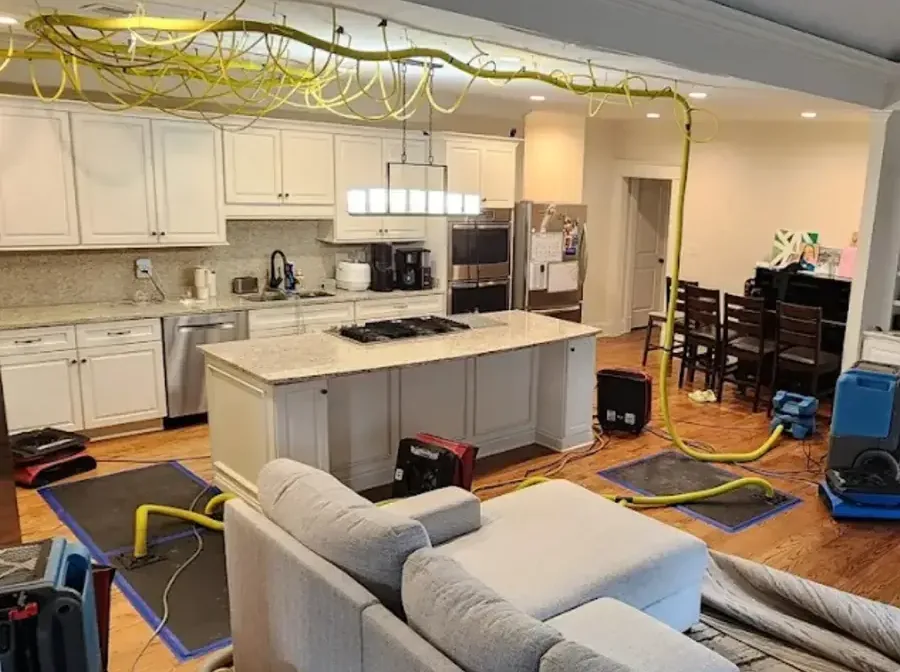
When creek water leaves a house, the damage keeps growing unless drying starts quickly. The City of Powder Springs gives owners a short list of first moves, and it also requires permits for flood damage repair work.
Key takeaways
- The city advises removing wet carpet and carpet padding as soon as possible after a flood.
- Open windows or a dehumidifier help prevent mold in a wet home, according to the city.
- The city requires permits for any flood damage repair work on a home, and applications go through the CommunityConnect portal.
- Powder Springs Creek crested at 19.82 feet on September 21, 2009, and floodplains are found throughout the city.
- Moisture readings, not a dry look, decide when drying is finished.
What the city says to do first
The city flood page advises removing wet carpet and carpet padding as soon as possible. It also suggests open windows or a dehumidifier to help prevent mold.
That advice matches how restoration crews work. Padding acts like a sponge, so it is the first material to go, and carpet comes up next so the subfloor can breathe.
Hauling soaked carpet out is heavy work, and a crew doing water extraction has the pumps and carts to do it quickly. Padding comes out in sections and is bagged so contamination stays off dry rooms.
- Pull wet carpet and pad as soon as it is safe to enter the room.
- Open windows only when the outdoor air is drier than the air inside; otherwise run a dehumidifier.
- Lift furniture legs off wet floors and move soft items to dry surfaces.
- Photograph the waterline and damaged items before anything is thrown out.
- Wear boots and gloves when handling wet carpet and padding.
Why the days after the water leaves matter
Time matters in every room. Wet materials pass moisture to dry neighbors, so a quick start to structural drying keeps the wet zone from growing while repairs are still being planned.
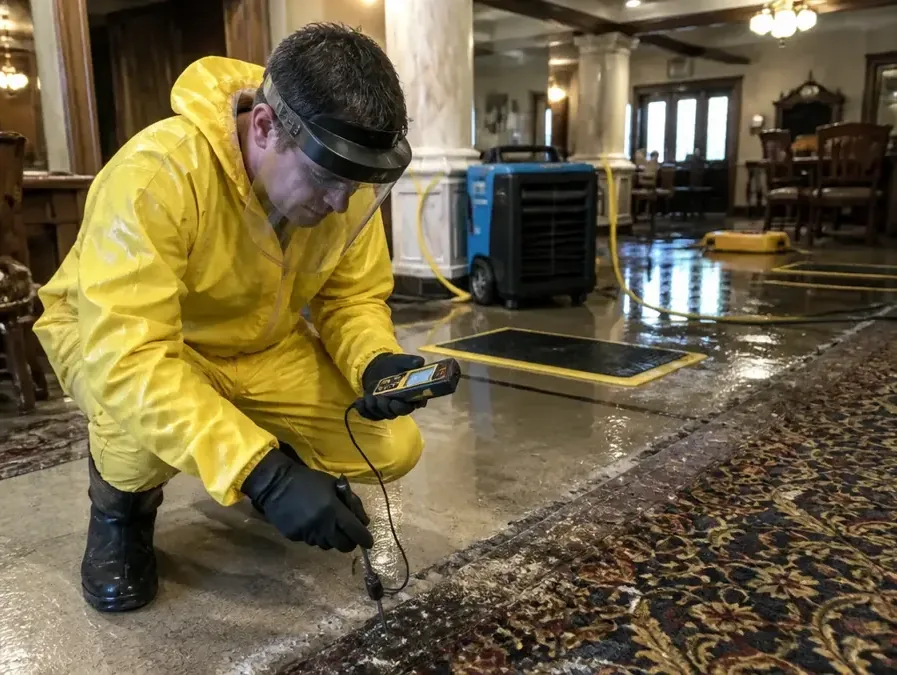
A dry looking floor can still hold water below the surface, so readings are taken at the subfloor and the wall bases before anything is closed.
Carpet, padding and flooring
Padding and soft flooring hold water and release it slowly into the room. Removing them gives the subfloor a chance to dry from the top, and hard flooring is checked board by board.
Drywall, insulation and framing
Water wicks up drywall above the visible stain, and wet insulation traps moisture against the framing. Cutting drywall back past the wet edge lets air reach the studs and bottom plates.
Hard flooring and cabinets
Hardwood and laminate are checked with a moisture meter plank by plank, and tile edges are checked where the floor meets the wall. Cabinet bases and trim take water from the floor and are opened where readings stay high.
Permits for flood damage repair in Powder Springs
The city says permits are required for any flood damage repair work on a home. The Community Development Department oversees permitting, plan checking and code enforcement through its Permitting and Inspections division.
Applications are accepted only electronically through the CommunityConnect portal. The city lists routine upkeep such as painting and wallpaper as work that needs no permit, but flood damage repair work is a different category.
The Permitting and Inspections division applies the Georgia State Building, Mechanical, Plumbing and Electrical Codes, and the city outsources building inspections to a third party provider.
- Dry first, then plan the repair and the permit.
- Applications are electronic only, through CommunityConnect.
- Owners who want to know whether a property sits in a Special Flood Hazard Area can call the Community Development Department with the address.
The creek history behind the advice
Powder Springs Creek flows along the west side of the city, near downtown and Powder Springs Park. It crested at 19.82 feet on September 21, 2009, and at 11.38 feet on October 11, 2018.
The city calls the September 2009 flood historic, says floodplains are found throughout the city and notes that localized flooding can follow when storm drains or channels are blocked. Flash floods can arrive in spring, summer and fall.
Flooding closed Brownsville Road just west of downtown on September 21, 2009. That date and the creek crest are local reference points for how fast water can rise.
Water has shaped the place for a long time. The city name comes from seven springs inside the city limits, whose mineral water turns the surrounding sand black like gunpowder, and the town was incorporated as Springville in 1838 and renamed in 1859.
A drying plan, step by step
The order of work protects the framing first and the finishes last. A written drying log records each step.
A dehumidifier keeps the air dry enough that moisture leaves the walls instead of resettling. Air movers keep that dry air moving across wet surfaces, and the readings show when both can go.
Each step is written into the log with a date, which gives the owner a clear record when the permit application is prepared.
- Extract standing water with pumps and wet vacuums.
- Remove padding, wet carpet and any soaked insulation.
- Open drywall past the wet edge and check the framing.
- Set air movers and dehumidifiers and log moisture readings each day.
- Close walls only after readings match a dry reference spot.
Mistakes that slow drying
Most delays come from a short list of habits. Each one lets moisture stay in the structure longer than it needs to.
- Leaving padding in place because the carpet on top looks fine.
- Relying on household fans alone and skipping the dehumidifier.
- Closing walls before readings match the dry reference.
- Throwing out damaged items before they are photographed.
- Skipping the daily readings and judging by touch.
Where the work starts
Cleanup after creek water begins with extraction and moves into drying once the standing water is gone. The broader flood and storm water cleanup work covers contaminated materials and sanitizing.
A drying log shows when walls can close and the permitted repair can begin.
Cleanup begins as soon as the room is safe, since each extra day of delay widens the wet area.
Records worth having ready when the work starts:
- Photographs of the waterline, wet rooms and damaged items.
- A list of rooms that took water, including closets and hallways.
- The drying log with daily moisture readings.
- The permit application, when repairs require one.
Questions
How soon should wet carpet come out after a flood?
The city advises removing wet carpet and carpet padding as soon as possible.
Do open windows help dry a flooded house?
The city lists open windows or a dehumidifier as ways to help prevent mold. Open windows work best when the outdoor air is drier than the air indoors.
Does flood damage repair need a city permit?
Yes. The city says permits are required for any flood damage repair work on a home.
How can an owner find out if a property is in a flood hazard area?
The Community Development Department can say whether an address sits in a Special Flood Hazard Area on the FEMA flood map.
Does painting or wallpaper need a permit?
The city lists routine maintenance such as painting, floor covering and wallpaper as work that needs no permit. Flood damage repair work does need one.
Is it safe to walk through a flooded room?
Not until the power to the room is off or the room is confirmed safe. Standing water can hide electrical hazards, and creek water carries contamination.